
This reflection guide explores key moments in U.S. history that shaped the struggle for civil rights, focusing on the lived experiences of African Americans across different time periods. Rather than memorizing dates or laws, you will be asked to think about how these events affected real people—their safety, dignity, opportunities, and sense of belonging.
As you move through the sections, you’ll see how unfair laws, violence, and exclusion were challenged by courage, protest, and collective action. You’ll also examine how the effects of these historical events continue to shape society today. The goal is not to tell you what to think, but to help you understand why these moments mattered and how history connects to the world you live in now.
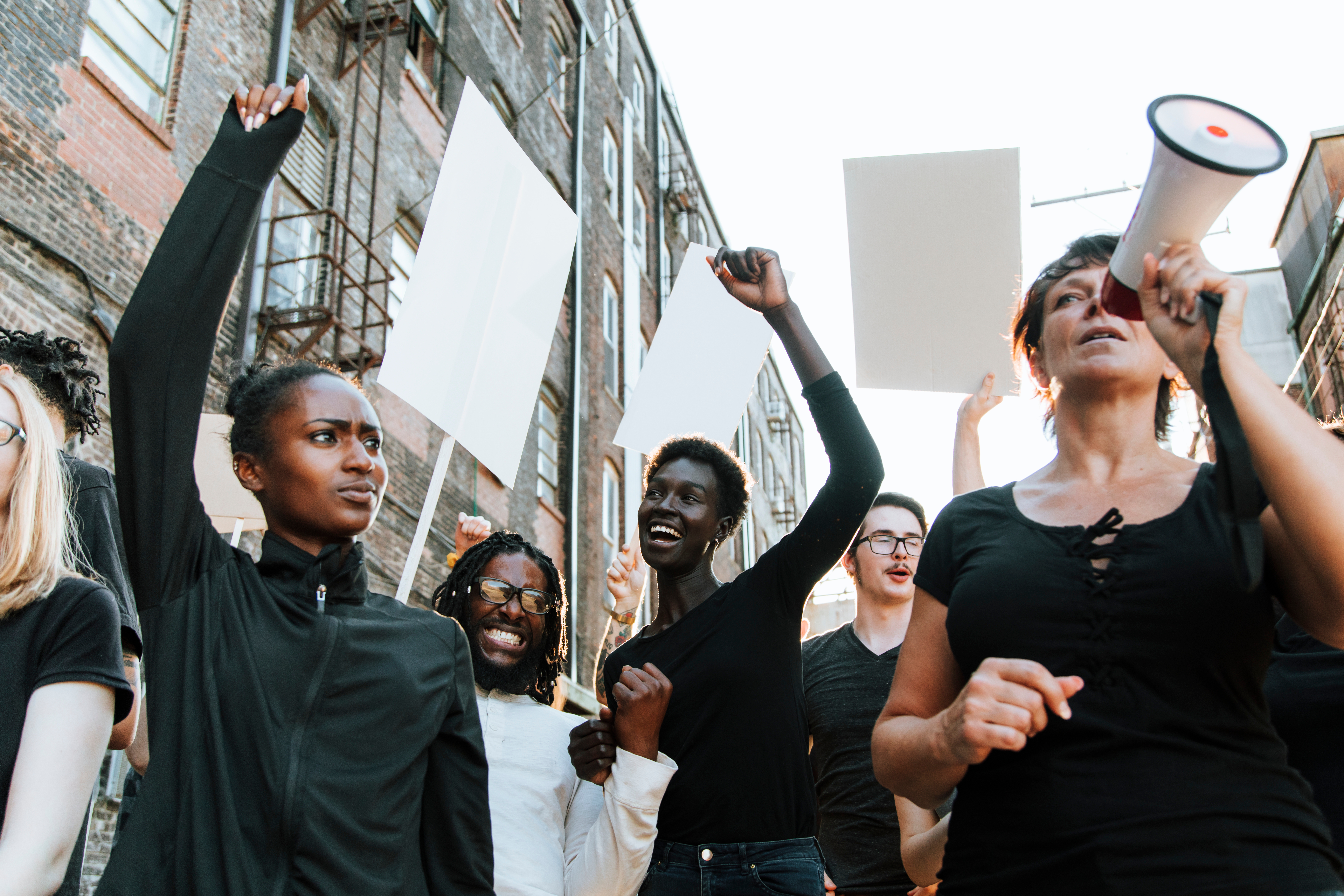
1. Separate Public Facilities
During the Jim Crow era (1870s), Black Americans were legally required to use separate and unequal public spaces, including being forced to sit in designated areas on buses and trains, all marked as “colored.” At the same time, white people had better, well-maintained facilities. Imagine living under laws that restricted where you could sit, eat, learn, or exist in public—not because of your actions, but because of your race. Reflect on how being reminded that you are “less than” because of race might affect someone’s sense of dignity, safety, and belonging, especially when this treatment was reinforced by law and violence. Consider how experiencing this daily could shape a person’s trust in society and how witnessing this treatment might influence those who were not directly targeted.
How would you react if someone were excluded based on race?
2. Voting Rights & Exclusion
Although the 15th Amendment promised voting rights in 1870, Black Americans faced decades of voter suppression through laws and intimidation that continued well into the civil rights era. For many years, Black Americans faced literacy tests, poll taxes, and intimidation designed to prevent them from voting. Reflect on how it would feel to be told you were unqualified to participate in democracy while others were automatically allowed to vote. Consider what voting represents beyond choosing leaders and how long-term exclusion from civic participation might shape a community’s relationship with government and power.
How might it feel to experience voter exclusion?
3. School Segregation
Before the 1954 Supreme Court decision in Brown v. Board of Education, schools in the United States were legally segregated, with Black students often attending underfunded and overcrowded schools. Reflect on what it would feel like to learn in a system that declared your education “separate” and treated it as less important. Consider how this inequality might affect a student’s confidence, opportunities, and sense of worth, and why equal access to education became a central civil rights issue.
How might this inequality affect a student’s learning experience?
4. Racial Violence & Injustice
In 1955, Emmett Till, a 14-year-old Black boy, was murdered after being falsely accused of offending a white woman. Reflect on how learning about this event makes you feel and what it reveals about fear, power, and injustice during that time. Consider how violence was used to enforce social rules and how this might have affected African American families, even in ordinary daily moments.
How might daily violence affect a family’s sense of safety and a community’s trust in society?
5. School Integration & Education
In 1957, nine Black students integrated Central High School in Little Rock, Arkansas (Little Rock Nine), facing hostility, threats, and military intervention. Reflect on what it would feel like to walk into a school where you are openly unwelcome and publicly opposed. Consider the emotional strength required to pursue education under those conditions.
Why did access to education become a defining civil rights issue?
6. Civil Rights Protests & Resistance
Rosa Parks & Montgomery Bus Boycott: In 1955, Rosa Parks refused to give up her seat on a segregated bus, sparking a year-long boycott. Reflect on what it might feel like to live under rules that limit your rights and dignity. Consider how one person’s courage can inspire collective action and how we can challenge unfair rules in our own communities today.
How did her resistance influence broader social change?
Lunch Counter Sit-Ins: In 1960, Black college students in Greensboro, NC, and across the South sat at segregated lunch counters, refusing to leave when denied service. Reflect on what it means to peacefully occupy a space where society tells you you do not belong. Consider the courage required to confront injustice nonviolently.
How can these actions inspire responsible civic behavior today?
Freedom Riders: In 1961, Black and white activists rode buses through the segregated South to challenge interstate segregation laws and were met with violence and arrests. Reflect on what it might feel like to face hostility or violence simply for asserting your right to equal treatment. Consider the courage it would take and how understanding these events helps us think about our responsibilities today to challenge injustice. Consider how the federal government’s response shaped civil rights progress and what this reveals about the relationship between citizens and the state.
Why would people put themselves in danger during interstate travel?
Freedom Marches: In 1963, children and teenagers in Birmingham, Alabama, were arrested and met with fire hoses and police dogs while protesting segregation. From the aforementioned March on Washington to the 1965 Selma to Montgomery marches, thousands protested peacefully for civil rights and voting access, often facing threats and violence. Reflect on what it might feel like to take a stand knowing your safety is at risk, and consider the emotional strength required to act for justice. Think about how these marches changed society and what responsibility we have today to continue working toward equality. Consider the ethical questions raised when youth become central to movements for justice.
What role did young people play in social movements, especially as nonviolent civil rights activists?
7. The Civil Rights Act & Voting Rights Act
The above protests and marches led to the passage of the Civil Rights Act of 1964 and the Voting Rights Act of 1965. This came after years of organized protest, legal challenges, and personal sacrifice by ordinary people. These landmark laws aimed to end legal discrimination and protect equal participation in American democracy. The Civil Rights Act outlawed segregation in public places, banned employment discrimination, and strengthened federal enforcement of civil rights protections. The Voting Rights Act prohibited discriminatory practices such as literacy tests and poll taxes and authorized federal oversight to ensure fair access to voting. Together, these laws helped dismantle Jim Crow systems and expanded legal protections for African Americans, reshaping civil rights in the United States.
Many activists faced arrest, violence, job loss, and even death while demanding equal treatment under the law. Reflect on why meaningful legal change often requires sustained pressure from communities rather than quick or easy solutions. Consider how these laws both reflected shifting public values and actively reshaped society by outlawing discrimination and protecting voting rights.
What does this history suggest about the relationship between protest, lawmaking, and justice in a democracy?
8. Public Assassination
After civil rights activist and leader of the Civil Rights Movement, Dr. Martin Luther King Jr., was assassinated in 1968, many U.S. cities experienced grief, unrest, and protest. Reflect on how the loss of a leader affects a movement and a nation. Consider how hope, anger, and fear can coexist during moments of national trauma, and what it means to continue pursuing justice even after violence.
What would it feel like to be part of the grieving community at that time?
9. Economic Inequality
Beginning in the mid-20th century (1930s) and continuing today, Black families were systematically denied mortgages and housing opportunities through housing discrimination and redlining. Reflect on how being prevented from living in certain neighborhoods affects wealth, education, and community resources over generations. Consider why housing policy is a civil rights issue and how historical decisions still shape inequality today.
How would it feel to see a neighbor denied a loan because of their skin color?
10. Criminal Justice & Mass Incarceration
During the War on Drugs in the 1980s and 1990s, policies and sentencing laws that were presented as race-neutral disproportionately impacted Black communities, leading to higher arrest rates, longer sentences, and widespread incarceration. The U.S. law punished possession of crack cocaine far more harshly than powder cocaine, for example, even though they are chemically similar substances. Crack cocaine was more commonly found in poorer, urban communities, while powder cocaine was more common in wealthier and suburban communities. Consider how incarceration impacts families, communities, and civic participation over time. Think about the long-term consequences for civic participation, including voting, employment, and trust in institutions.
How can laws that do not mention race still produce unequal outcomes? What happens to the African American communities/families affected by these laws?
11. Media Representation
Media often shapes the way we see the world, but coverage can be incomplete, biased, or stereotypical. Communities of color are frequently portrayed in ways that ignore their full humanity, overgeneralize their experiences, or highlight negative stories while ignoring systemic causes. For example, news reports may focus on crime in Black neighborhoods without context. When Trayvon Martin was killed (2012), media coverage often focused on aspects of behavior or appearance—sometimes implying blame—rather than fully addressing the systemic issues of racial profiling and police violence. Headlines and social media posts frame Black Americans in ways that influence public perception, sometimes questioning their character instead of highlighting the injustice they experienced. Reflect on how these portrayals might affect public perception, reinforce stereotypes, or influence policy and social attitudes.
How might biased or incomplete media coverage shape the way we think about certain communities?
12. Modern Civil Rights Movements
In 2020, the killing of George Floyd sparked Black Lives Matter protests around the world, calling attention to current racial injustice, profiling, and policing. Reflect on why this moment resonated globally and how public protest functions in a democracy. Consider the different ways people respond to injustice and what role empathy plays in social change.
How would it affect your family if you lost someone to racial violence? Would you form a movement?
What responsibilities do people today have to learn about this history?
How can individuals respond when they see unfair treatment now?
Additional Resources
- Civil Rights Leaders Students Should Research | Mission Momplex
- Celebrate Black History Month at Church, Homeschool, and School | Mission Momplex
- DTOS_Healing_Prompts_0.pdf
- Microsoft Word – NDORH_ConversationGuide_2019_V6_12-10-18 FINAL_proofed.docx
Recent Posts
Starting a Business While Welcoming a New Baby: Finding Your Balance in the Chaos
We’re excited to feature today’s guest post from Josh Moore of Diaper Dads! Josh started Diaper Dads because he knows parenting is a learning curve—and sometimes you just need a little backup...
We created this list of family-friendly restaurants in South Seattle to help our neighbors and readers discover some of the best local spots in our area. Each restaurant was carefully chosen for its...