
This timeline presents major turning points in world history, tracing humanity’s development from the earliest shifts in how people lived to the global transformations of the modern era. In constructing this list, I have intentionally included different kinds of historical change: long-term social and technological transformations, sweeping cultural and intellectual movements, decisive political or military events, and sudden catalytic moments that redirected the trajectory of nations or the world.
Because history is shaped both by slow structural change (such as the Agricultural Revolution or the Renaissance) and by rapid, dramatic events (such as assassinations or surprise attacks), the scale of entries in this timeline varies. Some entries describe transformations that unfolded over centuries; others capture moments that lasted hours or days yet altered the course of history in profound ways.
The purpose of this timeline is not to rank events or force them into uniform categories, but rather to provide a broad, accessible overview of turning points that can serve as anchors for discussion, lesson building, and deeper inquiry. The entries are written with enough context that they can be read as background, used as prompts for research, or adapted into activities.
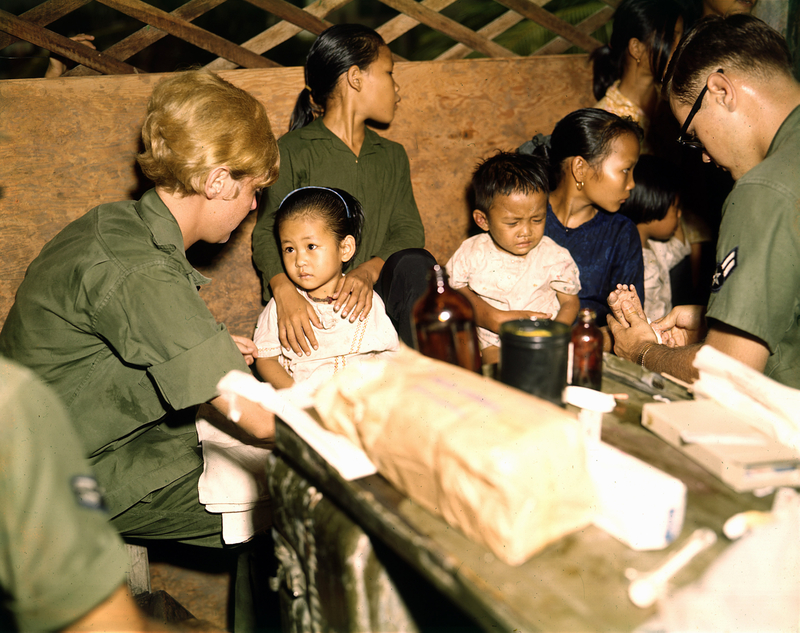
1. Agricultural Revolution (c. 10,000 BCE)
The Agricultural Revolution marks one of the most profound turning points in human history. Before this shift, humans lived as nomadic hunter-gatherers, following seasonal food sources and moving constantly to survive. Around 10,000 BCE, communities in multiple regions of the world began experimenting with the domestication of plants and animals, learning how to cultivate crops such as wheat, barley, maize, and rice.
This transition allowed humans to settle in one place, building permanent villages and eventually cities. Reliable food production increased population, diversified labor, and allowed people to pursue specializations such as crafting, trade, governance, and art. Agriculture also reshaped social structure, giving rise to property ownership, social hierarchies, and organized religion.
The changes were slow and uneven, but their impact was total. Without agriculture, there would have been no Great Pyramids, no written language, no science, and no civilization as we know it today.
Impact:
The Agricultural Revolution created the conditions for all later human progress. It enabled population growth, technological innovation, and the development of complex societies. By moving humanity out of a purely survival-driven existence, it opened the door to culture, science, politics, and art. Its effects continue to shape global society, economy, and ecology even in the modern era.
2. Building of the Great Pyramid of Giza (c. 2580–2560 BCE)
The building of the Great Pyramid at Giza stands as one of the most remarkable achievements of ancient engineering and a lasting symbol of Egypt’s power and religious devotion. Constructed during the reign of Pharaoh Khufu, the pyramid served as a monumental tomb designed to ensure the ruler’s safe passage into the afterlife. Thousands of skilled laborers, artisans, and engineers worked for decades, quarrying and transporting massive limestone blocks and developing techniques that still inspire awe today.
The pyramid complex also reflected the centralized authority and advanced administrative organization of ancient Egypt. The precision of its design, alignment with the cardinal directions, and massive scale demonstrated both engineering sophistication and deep spiritual meaning.
Over time, the Great Pyramid became a testament to human ingenuity and remains the oldest and largest of the Seven Wonders of the Ancient World.
Impact:
The Great Pyramid symbolizes humanity’s early mastery of large-scale construction. The building of the Great Pyramid influenced architecture, mathematics, and engineering for millennia, inspiring later cultures and becoming a key symbol of human ambition and creativity. It also provided modern historians with invaluable insights into ancient Egyptian religion, labor organization, and technological capability. Today, it continues to shape our understanding of the ancient world and reminds us of what can be achieved through collective effort and innovation.
3. Fall of Persia (330 BCE)
The Fall of Persia came after centuries of dominance by the Achaemenid Empire, one of the largest and most powerful empires the ancient world had ever known. Internal strain, military overreach, and growing dissatisfaction among subject peoples weakened the empire, but it was the invasion of Alexander the Great that delivered the final blow. His decisive victories at Issus and Gaugamela toppled the Persian military and forced the empire’s collapse.
The conquest reshaped the political and cultural landscape of the Near East. Greek language, art, and ideas spread throughout Persia and beyond, creating a new Hellenistic culture that blended traditions from both worlds. The fall also ended the Persian imperial system and opened the region to centuries of shifting rule and cultural exchange.
Impact:
The fall of Persia transformed the ancient world by spreading Greek culture and encouraging cross-cultural exchange on a massive scale. Its collapse demonstrated how even vast empires can fail under military pressure and internal fragmentation. The cultural blending that followed influenced philosophy, science, architecture, and trade for centuries afterward.
4. Founding of Eastern Roman Empire (330 CE)
The founding of the Eastern Roman Empire began when Emperor Constantine reorganized the Roman Empire and established a new capital at Byzantium, later renamed Constantinople. This shift recognized the growing political, economic, and strategic importance of the eastern Mediterranean and created a distinct eastern state that would survive long after the Western Empire fell.
The Eastern Roman Empire preserved Roman law, Greek culture, and Christian theology, becoming a center of learning and artistic achievement. It defended Europe from invasions for centuries and served as a bridge between ancient and medieval worlds.
Its history is marked by strong emperors, religious controversy, and periods of both great prosperity and dramatic decline, culminating in its fall to the Ottoman Turks in 1453.
Impact:
The Eastern Roman Empire shaped the development of Christianity, preserved classical knowledge, and influenced art, architecture, and law throughout Europe and the Near East. Its legacy can be seen today in legal systems, religious traditions, and cultural exchange across three continents.
5. Fall of the Western Roman Empire (476 CE)
The fall of the Western Roman Empire occurred when the last emperor, Romulus Augustulus, was deposed by the Germanic leader Odoacer. This event is traditionally used to mark the end of ancient Rome and the beginning of the Middle Ages in Europe.
The empire had been weakened by economic troubles, political instability, military pressure from invading groups, and the enormous burden of maintaining such a vast territory. By the 5th century, Rome could no longer defend its borders or sustain its infrastructure.
Impact:
The fall reshaped Europe politically and culturally. New kingdoms emerged, trade patterns shifted, and the influence of classical Rome slowly gave way to medieval feudal systems. The ideas of Rome, however, continued to influence law, architecture, language, and government for centuries.
6. The Black Death (1347–1351)
The Black Death was a devastating pandemic that swept through Europe, Asia, and North Africa, killing an estimated 25–50 million people. Spread by fleas carried by rats, the plague moved along trade routes and hit urban areas especially hard.
Communities collapsed under the weight of mass death. Entire villages disappeared, labor shortages transformed economies, and fear led to widespread social and religious upheaval. People sought explanations, blamed minority groups, or turned to spirituality in desperate attempts to understand the crisis.
Impact:
The pandemic reshaped European society, increasing the value of labor, weakening feudal systems, and shifting power dynamics between peasants and nobility. It also accelerated medical inquiry and public health practices.
7. The Renaissance (14th–17th Century)
The Renaissance was a cultural and intellectual movement that began in Italy and spread across Europe. It revived interest in classical art, literature, science, and humanism—an approach that emphasized human potential and achievement.
Artists such as Leonardo da Vinci and Michelangelo transformed visual art. Thinkers like Galileo and Copernicus challenged scientific beliefs, while writers like Shakespeare expanded literature. Political ideas also shifted as scholars reconsidered governance and citizenship.
Impact:
The Renaissance accelerated advancements in art, science, and philosophy. It laid the groundwork for the modern era by encouraging innovation, questioning old assumptions, and promoting education.

8. The Printing Press Invented (Gutenberg Press, c. 1440)
Johannes Gutenberg’s invention of the movable-type printing press revolutionized the way information spread. Before this, books were copied by hand, making them expensive and rare. The printing press allowed for mass production of books, pamphlets, and newspapers.
The rapid spread of printed material fueled literacy, education, and the sharing of ideas across borders. It contributed directly to major historical movements, including the Reformation, the Scientific Revolution, and the Enlightenment.
Impact:
The printing press democratized information. It laid the foundation for modern communication, public education, journalism, and scientific collaboration.
9. Fall of the Eastern Roman Empire / Constantinople (1453)
In 1453, the Ottoman Empire captured Constantinople, ending the Eastern Roman (Byzantine) Empire. The fall came after months of siege and marked a major shift in world power.
The Ottomans transformed Constantinople into Istanbul, making it the capital of their rapidly growing empire. Scholars fleeing the city brought classical texts to Western Europe, contributing to the Renaissance.
Impact:
This event reshaped trade routes, strengthened the Ottoman Empire, and indirectly motivated European exploration as nations sought new paths to Asia. It also ended the last remnant of the Roman Empire.
10. Discovery of the Americas (1492)
In 1492, Christopher Columbus’s voyage across the Atlantic connected Europe with the Americas for the first time in recorded history. Although Indigenous peoples had lived in the Americas for thousands of years, Columbus’s arrival marked the beginning of widespread European exploration and colonization.
This encounter reshaped societies on both sides of the Atlantic. It led to cultural exchange, forced labor systems, disease outbreaks that devastated Indigenous populations, and major shifts in global trade.
Impact:
The “Columbian Exchange” transformed agriculture, economies, and cultures worldwide. The discovery also set the stage for the formation of modern nations across North and South America.
11. The Mughal Empire (1526–1857)
The Mughal Empire was one of South Asia’s most powerful and culturally influential empires. Founded by Babur, it expanded over centuries under leaders like Akbar, Jahangir, and Shah Jahan.
The empire is known for its advancements in architecture, including the Taj Mahal, and for its sophisticated administrative system. The Mughal rulers also blended Persian, Indian, and Islamic cultures, creating rich traditions in art, literature, and governance.
Impact:
The Mughal Empire shaped India’s cultural and political landscape. Its influence is still seen today in architecture, language, religion, and cultural identity.
12. Scientific Revolution (c. 1543–1700)
The Scientific Revolution was a period of dramatic change in how humans understood the natural world. Thinkers such as Copernicus, Galileo, Kepler, Descartes, and Newton challenged long-held beliefs and introduced new methods of observation, experimentation, and mathematical explanation. Copernicus proposed a heliocentric universe, Galileo used telescopes to confirm new astronomical discoveries, and Newton unified motion and gravity under one theory.
This shift represented more than new discoveries — it rewired how people thought about truth. Observation became more important than authority, and science became a disciplined method rather than speculation or tradition.
The Scientific Revolution is often seen as the foundation of modern science, enabling later breakthroughs in physics, biology, medicine, and technology.
Impact:
The Scientific Revolution changed humanity’s understanding of the universe and laid the groundwork for the Enlightenment and modern scientific method. It empowered progress in technology, improved medicine, and reshaped philosophy by showing how empirical evidence could transform knowledge.
13. The Enlightenment (c. 1680–1800)
The Enlightenment was an intellectual and cultural movement that transformed how people understood the world and their place in it. Enlightenment thinkers challenged traditional authority, arguing that reason, evidence, and scientific inquiry were more reliable guides than tradition or religious dogma. They explored ideas about government, morality, and human rights, weaving together philosophy, politics, and science.
Figures such as John Locke argued for natural rights and government by consent, Voltaire criticized censorship and intolerance, Rousseau explored social contract theory, and Kant urged individuals to “dare to know.” Scientific achievements built upon the earlier Scientific Revolution reinforced the belief that humanity could understand and shape the world through rational thought.
Enlightenment ideals spread through books, pamphlets, salons, and, significantly, the printing press. These ideas did not stay theoretical — they directly inspired political upheavals, constitutional writing, and movements for equality and representation.
Impact:
The Enlightenment reshaped global political thought and laid the foundation for modern democracy, human rights, and secular governance. Its influence can be seen in the American Revolution, the French Revolution, the formation of constitutional governments, and contemporary debates about liberty and justice. The movement also advanced education, science, and skepticism in ways that continue to define the modern worldview.
14. The Industrial Revolution (1760–1840)
The Industrial Revolution transformed the world from an agricultural economy to one driven by machinery, factories, and mass production. New inventions such as the steam engine, spinning jenny, and mechanized looms revolutionized manufacturing and transportation.
Cities grew rapidly as people moved from rural areas to work in factories. While industrialization brought economic growth and innovation, it also introduced harsh working conditions, child labor, and pollution.
Impact:
The Industrial Revolution reshaped global economies, social classes, and lifestyles. It laid the foundations for modern technology, consumer culture, capitalism, and urbanization.
15. The American Revolution (1775–1783)
The American Revolution began as a colonial struggle against British taxation and control. Thirteen colonies united to fight for independence, motivated by Enlightenment ideas such as liberty, representation, and natural rights.
Major events such as the Boston Tea Party, Declaration of Independence, and Battle of Yorktown defined the conflict. With help from France, the colonies won their independence and formed the United States.
Impact:
The revolution inspired democratic movements worldwide. It introduced new principles of self-government, constitutional rights, and national identity. The U.S. Constitution became a model for emerging nations.
16. The French Revolution (1789–1799)
The French Revolution began as a revolt against inequality, heavy taxes, and absolute monarchy in France. Citizens—especially members of the Third Estate—demanded political representation and economic reform. The storming of the Bastille, the execution of King Louis XVI, and the rise of radical groups marked this turbulent decade.
The revolution brought dramatic political and social upheaval. It abolished feudal privileges, promoted Enlightenment ideals, and challenged long-standing power structures across Europe. Although it eventually led to the rise of Napoleon Bonaparte, its influence spread globally.
Impact:
The French Revolution helped shape modern democracy. It introduced ideas like human rights, citizenship, and secular governance, influencing revolutions in Latin America, Europe, and beyond.
17. The Gettysburg Address (1863)
Delivered by President Abraham Lincoln during the Civil War, the Gettysburg Address redefined the purpose of the conflict. In just 272 words, Lincoln emphasized equality, democracy, and national unity while honoring soldiers who died in the Battle of Gettysburg.
Though brief, the speech reshaped American identity. Lincoln framed the war as a struggle not just for union, but for the promise of freedom and equality for all people.
Impact:
The address remains one of the most influential speeches in history, shaping American civil ideals and becoming a cornerstone of education on democracy and citizenship.

18. Suez Canal Completed (1869)
The construction of the Suez Canal marked one of the most ambitious engineering projects of the nineteenth century and transformed global trade forever. Built under the direction of Ferdinand de Lesseps, the canal connected the Mediterranean Sea to the Red Sea, creating a direct maritime route between Europe and Asia for the first time in history. Thousands of laborers, including many conscripted workers, toiled under harsh conditions to carve a navigable waterway through the Isthmus of Suez.
The canal quickly became a strategic and economic lifeline. It reduced travel time between continents dramatically, reshaped shipping routes, and increased the flow of goods, people, and ideas across the world. Control of the canal became a key geopolitical concern, drawing in colonial powers and fueling diplomatic tensions for decades.
The opening of the Suez Canal also highlighted the growing interdependence of global economies and the importance of infrastructure in shaping political power.
Impact:
The Suez Canal revolutionized international trade by shortening shipping distances and lowering transportation costs, accelerating globalization long before the modern era. It became a focal point of imperial ambition and later nationalist movements, influencing politics in the Middle East and Europe. Today, it remains one of the most critical maritime corridors in the world, demonstrating how infrastructure can reshape global history.
19. The Assassination of Archduke Franz Ferdinand (1914)
The assassination of Archduke Franz Ferdinand of Austria-Hungary by a Serbian nationalist in Sarajevo triggered a chain reaction among European alliances. What could have been a localized conflict quickly escalated into World War I.
The event exposed how fragile peace in early 20th-century Europe was, as nationalism, militarism, and alliances pushed nations into conflict. Within weeks, major powers declared war.
Impact:
The assassination is studied as a key example of how a single political event can shift global history. It directly set the stage for World War I and the dramatic changes that followed.
20. World War I (1914–1918)
World War I began after the assassination of Archduke Franz Ferdinand, but deeper causes included militarism, alliances, imperial competition, and nationalism. The conflict involved many nations and introduced new forms of warfare such as machine guns, tanks, and poison gas.
Battles like the Somme and Verdun revealed the devastating human cost of trench warfare. The war ended with the Treaty of Versailles, which imposed harsh penalties on Germany and redrew borders across Europe and the Middle East.
Impact:
The war destroyed empires, reshaped continents, and fueled political revolutions. It also sowed the seeds of World War II through unresolved tensions and economic hardship.
21. The Russian Revolution (1917)
The Russian Revolution replaced centuries of monarchy with communist rule. In early 1917, widespread protest forced Tsar Nicholas II to abdicate. Later that year, the Bolsheviks, led by Vladimir Lenin, seized power in the October Revolution.
The revolution sparked a brutal civil war and paved the way for the formation of the Soviet Union. It drastically altered Russian society—redistributing land, industry, and political control—and positioned the USSR as a major global power.
Impact:
The revolution reshaped world politics by spreading communist ideology, influencing revolutions in Asia, Europe, and Latin America, and helping set the stage for the Cold War.
22. The Chinese Civil War (1927–1949)
The Chinese Civil War was a prolonged struggle between the Communist Party of China, led by Mao Zedong, and the Nationalist Kuomintang (KMT). The war included long periods of conflict, strategic retreats such as the Long March, and cooperation during Japan’s invasion in World War II.
Communist victory in 1949 led to the founding of the People’s Republic of China, while the Nationalists retreated to Taiwan. The conflict fundamentally reshaped Chinese society, economy, and political structure.
Impact:
The war’s outcome set the stage for China’s rise as a global power and continues to influence global politics, including tensions between China and Taiwan.
23. Wall Street Crash (1929)
The Wall Street Crash of 1929, also known as Black Tuesday, marked the dramatic collapse of the United States stock market and set the stage for the Great Depression. For years before the crash, stock prices had risen rapidly as investors borrowed money to speculate on ever-increasing returns. When confidence faltered and investors began to sell en masse, prices plummeted within days.
The crash wiped out billions of dollars in wealth and triggered a chain reaction through banks, businesses, and global markets. The sudden loss of savings and credit sent economies into freefall, revealing deep structural weaknesses in financial systems and investment practices.
The shock of the crash reverberated around the world, demonstrating how interconnected economies had become and how fragile unregulated financial growth could be.
Impact:
The Wall Street Crash reshaped economic policy and regulation. Governments introduced banking reforms, social safety nets, and oversight designed to prevent similar collapses. The crash also changed how people thought about risk, investment, and financial security, leaving a lasting imprint on modern economics and public policy.
24. The Great Depression (1929–1939)
The Great Depression was the worst global economic crisis in modern history, beginning with the Wall Street Crash of 1929 and spiraling into a decade of widespread unemployment, poverty, and uncertainty. Banks collapsed, businesses failed, and millions of people lost their life savings almost overnight. As credit dried up and production slowed, families struggled to afford basic necessities, and entire communities were pushed to the brink.
Governments around the world responded in different ways, experimenting with new economic policies and public works programs in an effort to stabilize economies and provide jobs. In the United States, President Franklin D. Roosevelt’s New Deal introduced sweeping reforms aimed at restoring confidence, providing relief, and preventing future collapses.
The Depression revealed deep weaknesses in the global financial system and highlighted the impact that economic policy can have on everyday life.
Impact:
The Great Depression reshaped governments and economies around the world. It expanded the role of government in regulating banks and protecting workers, and it changed how people understood economic security. The crisis also influenced culture, politics, and social movements, leaving a lasting imprint on how modern societies respond to recession and inequality.
25. The Third Reich / Nazi Germany (1933–1945)
Under Adolf Hitler’s rule, Germany became a totalitarian state known as the Third Reich. The regime used propaganda, fear, and violence to control society, eliminate political opposition, and promote racist ideologies.
Nazi policies led directly to World War II, the Holocaust, and widespread destruction across Europe. Hitler’s government pursued territorial expansion, militarization, and harsh repression of minority groups.
Impact:
The Third Reich left lasting warnings about fascism, authoritarianism, and discrimination. It reshaped global politics and led to the creation of international human rights laws and institutions.
26. The Holocaust (1933–1945)
The Holocaust was the systematic, state-sponsored genocide carried out by Nazi Germany, which targeted Jews, Roma, disabled individuals, LGBTQ people, and others deemed “undesirable.” Six million Jews were murdered, along with millions of others across ghettos, concentration camps, and extermination camps.
Under Adolf Hitler’s leadership, the Third Reich framed its brutality as racial “purification.” The Holocaust devastated European Jewish communities and stands as one of humanity’s darkest crimes.
Powered by propaganda, discrimination, and totalitarian control, the Holocaust revealed the extremes of prejudice and unchecked power. Survivors’ testimonies now form a central part of global human rights education.
Impact:
The aftermath of the Holocaust led directly to the Universal Declaration of Human Rights, the creation of Israel, and new international laws concerning genocide, war crimes, and human rights.
27. World War II (1939–1945)
World War II was the deadliest conflict in human history, involving more than 30 countries. It began with Germany’s invasion of Poland and expanded across Europe, Asia, Africa, and the Pacific. The war introduced large-scale air combat, amphibious invasions, and unprecedented civilian impact.
Key events include the Holocaust, the bombing of Pearl Harbor, the D-Day invasion, the Battle of Stalingrad, and the atomic bombings of Hiroshima and Nagasaki. The war ended with the defeat of the Axis powers and the emergence of the United States and Soviet Union as superpowers.
Impact:
World War II reshaped political borders, launched the United Nations, began the Cold War, and accelerated global movements for independence and human rights.
28. Japanese Attack on Pearl Harbor (1941)
The attack on Pearl Harbor took place on December 7, 1941, when the Imperial Japanese Navy launched a surprise military strike against the United States naval base in Hawaii. The assault destroyed battleships, aircraft, and infrastructure, killing more than 2,400 Americans. This attack abruptly ended U.S. neutrality in World War II.
Japan’s goal was to cripple the U.S. Pacific Fleet and prevent interference in its expansion across Southeast Asia. However, the consequences were far from what Japan intended. The attack galvanized the American public, leading the United States to declare war on Japan and formally enter World War II.
Impact:
The attack shifted the balance of global power. The United States joined the Allies, bringing new military strength that heavily influenced the outcome of the war. Pearl Harbor also marked the beginning of a total-war mobilization that reshaped American society, industry, and foreign policy.
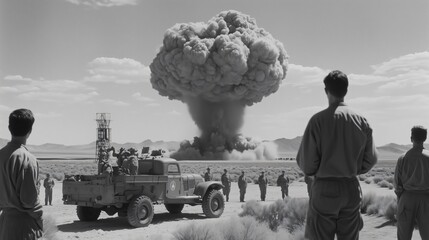
29. Atomic Bombing of Hiroshima & Nagasaki (1945)
In August 1945, the United States dropped atomic bombs on the Japanese cities of Hiroshima (August 6) and Nagasaki (August 9). These were the first—and so far only—times nuclear weapons have been used in war. The bombs caused catastrophic destruction, killing more than 200,000 people instantly or shortly after due to injuries and radiation.
The bombings forced Japan’s surrender, effectively bringing World War II to an end. However, they also introduced the world to the devastating power of nuclear technology, which would shape international relations for decades.
Impact:
These events transformed international politics, grounding the entire Cold War in nuclear competition and deterrence. The bombings remain among the most debated actions in military history, raising ethical, humanitarian, and strategic questions still discussed today.
30. The British Empire Shrinks / Decolonization (1945–1997)
Once described as the empire on which the sun never set, the British Empire began to contract rapidly after World War II as colonized peoples demanded independence and global attitudes shifted against imperial rule. Economic strain, anti-colonial movements, and the rise of new superpowers made maintaining empire increasingly impossible.
India’s independence in 1947 marked the beginning of a wave of decolonization that swept through Africa, Asia, and the Caribbean. Nations such as Ghana, Kenya, Malaysia, and many others gained sovereignty. The handover of Hong Kong in 1997 is often seen as the symbolic end of Britain’s imperial era.
Impact:
Decolonization reshaped global politics, producing dozens of new nations and redefining international relations. It also forced former imperial powers and newly independent states to confront issues of identity, inequality, and historical responsibility. The decline of the British Empire remains one of the most significant geopolitical transformations of the 20th century.
31. Formation of the United Nations (1945)
In the aftermath of World War II, the world sought a stronger and more effective international organization to prevent future global conflict. In October 1945, representatives from 50 countries gathered in San Francisco to sign the Charter of the United Nations.
The UN was created to promote peace, facilitate diplomacy, offset humanitarian crises, and support international cooperation on health, climate, human rights, and development. Its major bodies include the General Assembly, Security Council, and International Court of Justice.
Although the UN has faced criticism and limitations, it has also been central to peacekeeping missions and international coordination on global issues.
Impact:
The formation of the UN reshaped international relations by creating a permanent forum for diplomacy and global cooperation. It influenced international law, human rights, and humanitarian intervention, and remains one of the central institutions in global governance.
32. Partition of India (1947)
The Partition of India was a momentous and traumatic event in South Asian history, marking the end of British colonial rule and the creation of two independent nations: India and Pakistan. As religious tensions between Hindus and Muslims escalated, British authorities decided to divide the subcontinent along religious lines, a decision implemented rapidly and with little planning.
The partition triggered one of the largest mass migrations in human history. Millions of people crossed newly drawn borders, often on foot, in search of safety and religious belonging. Violence erupted across the region, resulting in hundreds of thousands of deaths and deep trauma that echoes to this day.
Impact:
The partition reshaped South Asia’s political, social, and cultural landscape. It created long-standing conflict between India and Pakistan, including disputes over Kashmir that persist into the present. The event also highlighted the profound human cost of colonial withdrawal and the challenges of nation-building in diverse societies.
33. The Cold War (1947–1991)
The Cold War was a decades-long geopolitical standoff between the United States and the Soviet Union. Although it did not escalate into direct large-scale warfare, it fueled proxy wars, espionage, political coups, nuclear arms races, and ideological conflict around the globe.
The world became divided into two spheres: democratic capitalist nations led by the U.S., and communist states led by the USSR. Events like the Korean War, Vietnam War, Cuban Missile Crisis, and Space Race were all shaped by this rivalry.
Impact:
The Cold War influenced global alliances, economics, military spending, and cultural attitudes. Its end dramatically reshaped world politics, marking the beginning of a unipolar world dominated by the United States.
34. Creation of Israel (1948)
In 1947, the United Nations approved a plan to partition British-ruled Palestine into separate Jewish and Arab states. Following the end of British control, Jewish leaders declared the independence of the State of Israel on May 14, 1948.
The creation of Israel triggered immediate conflict as neighboring Arab states invaded, beginning the Arab–Israeli War. The conflict displaced large populations on both sides and created a geopolitical dispute that continues today.
The founding of Israel also represented the realization of a long-standing movement for Jewish self-determination following centuries of persecution and the horrors of the Holocaust.
Impact:
The creation of Israel reshaped the Middle East, leading to ongoing territorial disputes, peace negotiations, and regional alliances. It also influenced global politics due to its strategic importance and the role of diaspora communities around the world.
35. The Civil Rights Movement (1954–1968)
The Civil Rights Movement in the United States sought to end racial segregation and discrimination against African Americans. Led by figures such as Martin Luther King Jr., Rosa Parks, Malcolm X, and countless community leaders, the movement used peaceful protests, sit-ins, marches, and legal challenges to demand equality.
Major turning points included the Montgomery Bus Boycott, March on Washington, Birmingham Campaign, and Selma to Montgomery marches.
Impact:
The movement produced landmark legislation such as the Civil Rights Act (1964) and Voting Rights Act (1965). It inspired global social justice movements and reshaped American society, law, and culture.
36. The Vietnam War (1955–1975)
The Vietnam War was a prolonged conflict between communist North Vietnam and U.S.-backed South Vietnam. What began as a regional struggle became a major Cold War battleground, drawing in the United States, the Soviet Union, and China.
The war featured intense ground combat, chemical warfare, and heavy bombing campaigns. It also triggered massive anti-war movements around the world.
Impact:
The war ended with the fall of Saigon in 1975 and the reunification of Vietnam under communist rule. It changed American public opinion about war, reshaped foreign policy, and left lasting scars on veterans, civilians, and regional politics.
37. Launch of Sputnik 1 (1957)
Sputnik 1, launched by the Soviet Union in October 1957, was the first artificial satellite ever sent into space. The small, beeping sphere orbited Earth and shocked the world—especially the United States—which had believed it was technologically ahead.
The event led to major investments in science, engineering, and education. It also increased Cold War tensions, as space technology was linked to military missile capabilities. Sputnik ignited the Space Race, a period of intense scientific and technological competition.
Impact:
The launch transformed global science and education. It led to the founding of NASA, massive investment in STEM education, and rapid acceleration of space technology. It also heightened Cold War tensions, as space achievements were closely tied to missile capabilities.
38. The Space Race (1957–1969)
The Space Race was a period of intense competition between the United States and the Soviet Union to achieve major milestones in space exploration. It began in 1957 when the Soviet Union launched Sputnik 1, the first artificial satellite, shocking the world and demonstrating the USSR’s advanced rocket technology. In response, the United States accelerated its own space program, leading to rapid scientific and engineering innovation.
Over the next decade, both nations raced to accomplish feats once thought impossible: sending animals and humans into orbit, performing spacewalks, and developing spacecraft capable of returning safely to Earth. The competition reached its climax in 1969 when NASA’s Apollo 11 mission successfully landed the first humans on the Moon, a moment watched by millions around the globe.
The Space Race pushed the boundaries of technology, strengthened national pride, and highlighted the strategic importance of scientific achievement during the Cold War.
Impact:
The Space Race dramatically advanced technology, communications, and computer science, with discoveries that still influence everyday life today. It inspired generations of scientists and engineers and expanded humanity’s understanding of the universe. The race also demonstrated how geopolitical competition can drive rapid progress — and how cooperation in space can eventually bring nations together.
39. The Cuban Missile Crisis (1962)
The Cuban Missile Crisis was a 13-day standoff between the United States and the Soviet Union after American reconnaissance discovered Soviet nuclear missiles stationed in Cuba. The world came dangerously close to nuclear war as both sides prepared for military confrontation.
President John F. Kennedy and Soviet Premier Nikita Khrushchev ultimately reached a secret negotiated settlement: the USSR removed its missiles from Cuba, and the United States removed its missiles from Turkey.
Impact:
The crisis led to new communication systems, including the Moscow–Washington hotline, and helped both nations recognize the need for arms control treaties. It remains one of the closest moments humanity has come to nuclear annihilation.
40. Assassination of John F. Kennedy (1963)
President John F. Kennedy was assassinated on November 22, 1963, in Dallas, Texas. His death shocked the world and led to decades of investigation, speculation, and conspiracy theories. Lee Harvey Oswald was arrested but killed before standing trial.
Kennedy’s presidency had symbolized hope, youth, and transformation, making his assassination a global emotional event.
Impact:
The assassination altered the trajectory of U.S. politics, strengthened the Civil Rights Act push, and reshaped public trust in government. It also introduced major reforms in presidential security and led to ongoing cultural examinations of political violence.
41. Moon Landing – Apollo 11 (1969)
On July 20, 1969, NASA astronauts Neil Armstrong and Buzz Aldrin became the first humans to walk on the Moon. The moon landing was a defining achievement of the Space Race and demonstrated the heights of human engineering and exploration.
Millions watched on television as Armstrong declared, “That’s one small step for man, one giant leap for mankind.”
Impact:
The mission advanced technology, inspired scientific careers, and propelled decades of space research. It also symbolized U.S. leadership during the Cold War and reshaped humanity’s imagination about space exploration.
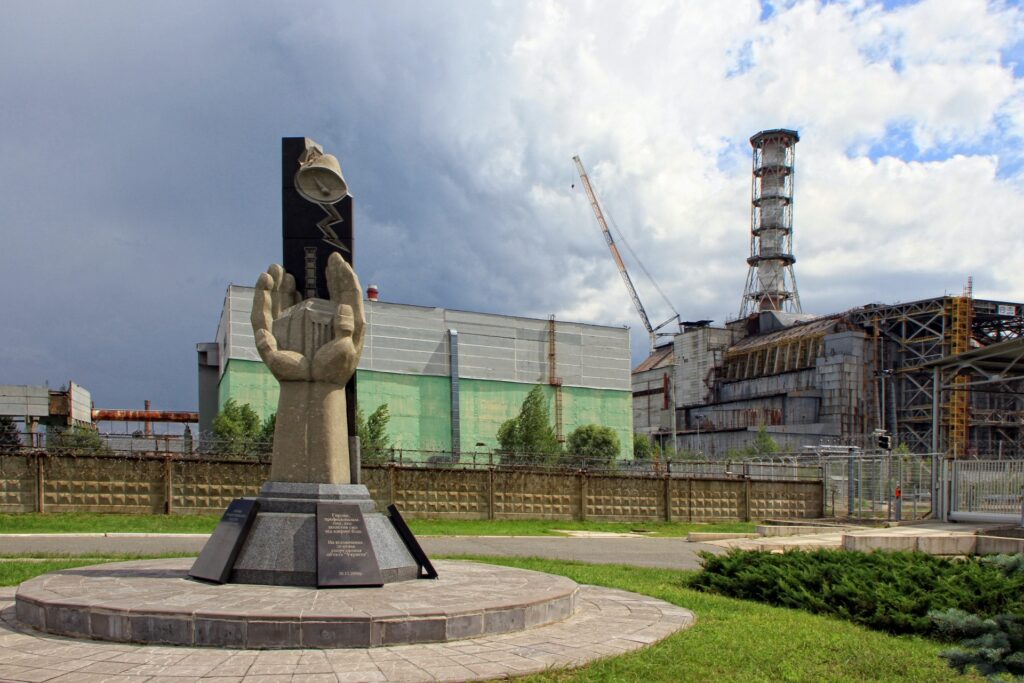
42. The Chernobyl Nuclear Disaster (1986)
The Chernobyl disaster occurred on April 26, 1986, when Reactor No. 4 at the Chernobyl Nuclear Power Plant in Ukraine exploded during a late-night safety test. The explosion released massive amounts of radioactive material across Ukraine, Belarus, Russia, and parts of Europe.
Initially, Soviet authorities attempted to hide the accident, delaying evacuations and limiting information. When radiation levels were detected in Sweden, the USSR was forced to reveal the disaster. Over 100,000 people were evacuated, and an exclusion zone remains in place today.
Impact:
Chernobyl is considered the worst nuclear accident in history. It exposed the dangers of nuclear technology, reshaped global nuclear policies, and contributed to rising distrust in the Soviet government. Many historians also cite Chernobyl as one factor that hastened the fall of the Soviet Union.
43. Introduction of the Internet (1980s-1990s)
The internet began as a U.S. Defense Department project called ARPANET, but it transformed in the early 1990s when it became accessible to the public. Tim Berners-Lee’s creation of the World Wide Web in 1989–1991 allowed users to access information through web pages and hyperlinks.
By the mid-1990s, email, search engines, and early websites revolutionized communication, education, research, and global connection. The internet became one of the most transformative inventions in human history.
Impact:
The internet reshaped every aspect of modern life—business, culture, politics, education, and social interaction. It enabled globalization, created new industries, and continues to influence the digital world, social media, and emerging technologies.
44. Fall of the Berlin Wall (1989)
The Berlin Wall, erected in 1961, divided East and West Berlin as a physical and ideological symbol of the Cold War. On November 9, 1989, after years of political pressure, peaceful protests, and weakening Soviet influence, East German authorities announced that citizens could freely cross the border.
Crowds gathered, and people began dismantling the wall by hand. The event marked a turning point in European history and set the stage for German reunification in 1990.
Impact:
The fall of the Berlin Wall signaled the beginning of the end for communist rule in Eastern Europe. It became a global symbol of freedom, unity, and the collapse of Soviet-style authoritarianism.
45. Fall of the Soviet Union (1991)
The Soviet Union officially dissolved on December 26, 1991, after years of economic stagnation, political unrest, and independence movements across its republics. Mikhail Gorbachev’s reforms—glasnost (openness) and perestroika (restructuring)—could not reverse the USSR’s decline.
Fifteen independent nations emerged from the breakup, including Russia, Ukraine, and the Baltic states. The end of the Soviet Union marked the conclusion of the Cold War.
Impact:
The dissolution reshaped global power dynamics, leaving the United States as the world’s sole superpower. It triggered major political, economic, and social transitions across Eastern Europe and Central Asia, many of which still influence global tensions today.
46. 9/11 September 11 Attacks (2001)
The September 11 attacks were a series of coordinated terrorist attacks carried out by the extremist group al-Qaeda against the United States. On the morning of September 11, 2001, hijackers crashed two commercial airplanes into the Twin Towers of the World Trade Center in New York City, causing both towers to collapse. A third plane struck the Pentagon, and a fourth crashed in Pennsylvania after passengers attempted to retake control.
The attacks killed nearly 3,000 people and became one of the deadliest acts of terrorism in world history. The sudden destruction and loss of life shocked the global community and revealed new vulnerabilities in international security systems.
In the immediate aftermath, the United States launched the War on Terror, which included military actions in Afghanistan and later Iraq, as well as major changes to domestic security and surveillance policies.
Impact:
The events of 9/11 reshaped global politics, international relations, and everyday life. They led to long-lasting military engagement, new anti-terrorism laws, and shifts in how nations cooperate on security. The attacks also influenced discussions about civil liberties, immigration, and the balance between safety and privacy. Today, 9/11 remains a defining moment in early 21st-century history and a reminder of the global impact of terrorism.
47. Indian Ocean Tsunami (2004)
On December 26, 2004, a massive undersea earthquake off the coast of Sumatra triggered a series of devastating tsunamis that struck Indonesia, Thailand, Sri Lanka, India, and several other nations. The waves reached heights of 30 meters (100 feet) in some areas.
More than 230,000 people were killed, making it one of the deadliest natural disasters in recorded history. Entire communities were destroyed, and millions were displaced.
Impact:
The disaster led to the creation of a new global tsunami warning system and increased investment in disaster preparedness. It also sparked one of the largest international humanitarian responses ever organized.
48. The Arab Spring (2010–2012)
The Arab Spring was a series of anti-government protests, uprisings, and revolutions that spread across the Arab world beginning in late 2010. Sparked by socioeconomic inequality, corruption, and authoritarian governance, citizens in Tunisia, Egypt, Libya, Syria, and other nations used social media and mass demonstrations to demand political reform and greater freedoms.
Some countries experienced peaceful transitions, while others descended into civil war or harsh repression. The movement showed both the power and fragility of rapid political mobilization in tightly controlled systems.
Impact:
The Arab Spring reshaped the politics of the Middle East and North Africa in profound ways. It led to the fall of long-standing dictators, created new democratic experiments, and triggered conflicts whose effects continue today, especially in Syria and Libya. The movement also demonstrated how digital communication can accelerate social change on a global scale.
49. The Paris Agreement (2015)
The Paris Agreement is an international climate treaty adopted in December 2015 at the United Nations Climate Change Conference (COP21). Its primary goal is to reduce global greenhouse gas emissions and limit global warming to below 2°C above pre-industrial levels.
Nearly every country in the world signed the agreement, committing to carbon reduction plans, renewable energy investments, and climate adaptation strategies.
Impact:
The Paris Agreement is the most significant global climate effort to date. It reshaped environmental policy worldwide and accelerated the transition toward sustainable energy. Although challenges remain, it represents a coordinated global commitment to addressing climate change.
50. Brexit (2016–2020)
Brexit refers to the United Kingdom’s decision to leave the European Union, decided by a 2016 public referendum. The vote revealed deep political, cultural, and economic divisions across the UK.
Negotiations between the UK and the EU lasted years and involved trade agreements, immigration rules, and Northern Ireland border policies. The UK officially left the EU on January 31, 2020.
Impact:
Brexit altered geopolitical relationships, trade patterns, and European unity. It influenced global markets, reshaped UK domestic politics, and continues to impact migration, trade, and diplomacy.
51. COVID-19 Pandemic (2019–2023)
COVID-19 emerged in late 2019 in Wuhan, China, and rapidly spread worldwide. Caused by the SARS-CoV-2 virus, it resulted in millions of deaths and unprecedented global disruption. Countries implemented lockdowns, travel restrictions, school closures, and health system expansions.
The pandemic accelerated medical innovation, including the rapid development of mRNA vaccines. It also highlighted global inequalities in health care, access to vaccines, and economic resilience.
Impact:
COVID-19 reshaped the world economically, socially, and politically. It transformed work culture through remote work, sped up digital adoption, and exposed vulnerabilities in global supply chains. Its long-term impact continues to evolve.
Sources
- Free Photos – Free Images
- 15 Historical Events That Shocked the World Overnight – History Collection
- The 100 Most Important Events in Human History | Make Lists, Not War
- History of the world: Some of the most important events since 1920
- Public Domain Pictures – Free Images & Stock Photos for Commercial Use
- 35+ Civil Rights Leaders Students Should Know—Research, Projects, Reports – Mission Momplex
Recent Posts
Starting a Business While Welcoming a New Baby: Finding Your Balance in the Chaos
We’re excited to feature today’s guest post from Josh Moore of Diaper Dads! Josh started Diaper Dads because he knows parenting is a learning curve—and sometimes you just need a little backup...
We created this list of family-friendly restaurants in South Seattle to help our neighbors and readers discover some of the best local spots in our area. Each restaurant was carefully chosen for its...