
When students are assigned research papers, projects, or reports, they often hear the same names repeated, and for good reason. Leaders like Martin Luther King Jr., Rosa Parks, and Harriet Tubman changed the course of history. But the story of civil rights is much larger, deeper, and more varied than most have time to explore.
Civil rights leaders come from many movements and fight for equality in different areas, but all share a commitment to justice. Whether you’re looking for a strong research topic or want to broaden your understanding of justice and equality, these men and women offer powerful stories, inspiring bravery, and lessons that still resonate today. Here are influential figures students are often asked to research, along with brief explanations of their impact.
1. Martin Luther King Jr. (1929–1968)
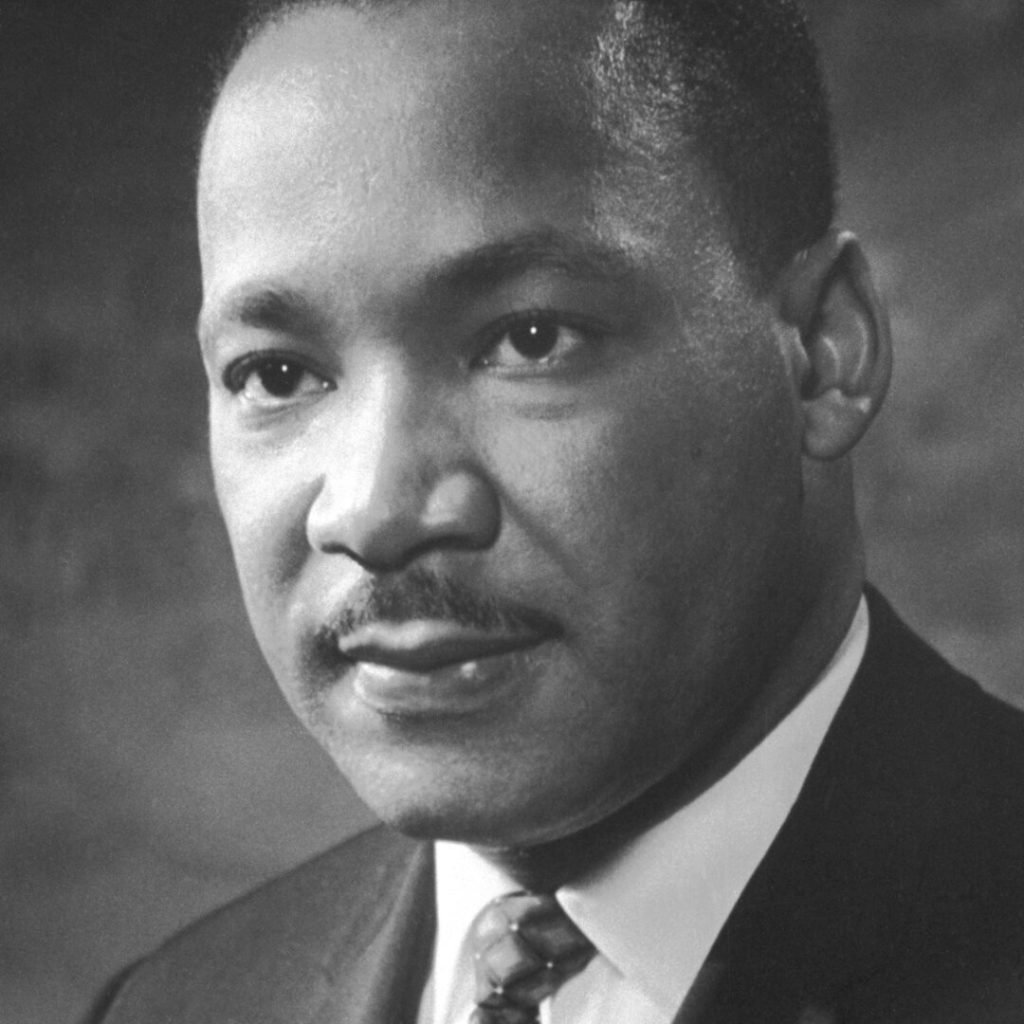
Nobel Foundation. (1964). Martin Luther King, Jr. [Photograph]. Wikimedia Commons. Link
Racial Equity Leader: Martin Luther King Jr. is best known as the most influential leader of the American Civil Rights Movement.
Martin Luther King Jr. was a Baptist minister and the most prominent leader of the American Civil Rights Movement. He advocated for nonviolent protest to end racial segregation and discrimination, delivering iconic speeches such as “I Have a Dream.” His leadership during the Montgomery Bus Boycott, the March on Washington, and the Selma marches helped secure major legislation like the Civil Rights Act and the Voting Rights Act.
He was awarded the Nobel Peace Prize in 1964 for his commitment to justice and equality.
King’s leadership helped end legal segregation and push through major federal protections such as the Civil Rights Act of 1964 and the Voting Rights Act of 1965. His moral clarity, courage, and message of nonviolence continue to inspire social justice movements around the world today.
He was assassinated in 1968 while supporting striking sanitation workers in Memphis.
Research Tip: Students can explore King’s letters and speeches (like “Letter from Birmingham Jail”) to understand how he used moral argument and persuasion to advance justice.
2. Rosa Parks (1913–2005)
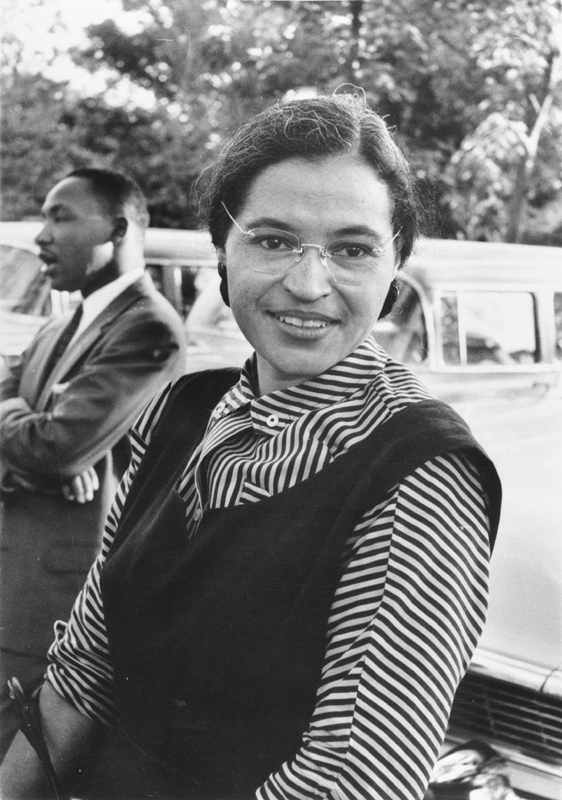
Associated Press. (1955). Rosa Parks arrives at circuit court to be arraigned in the racial bus boycott, Montgomery, Ala. [Photograph]. Wikimedia Commons. Link
Racial Equity Leader: Rosa Parks is best known for refusing to give up her seat on a Montgomery, Alabama bus, an act of quiet courage that sparked the Montgomery Bus Boycott.
Rosa Parks is known as the “Mother of the Civil Rights Movement” after she refused to give up her bus seat to a white passenger in Montgomery, Alabama. Her simple act of resistance sparked the Montgomery Bus Boycott, a 381-day protest that ended segregated seating on buses. Parks continued to fight for equality throughout her life, working with civil rights organizations and advocating for justice, dignity, and voting rights.
Parks’s action became a powerful symbol of resistance against unjust laws and helped launch a mass movement that challenged segregation across the United States. Her bravery reminds us that everyday acts can create historic change.
Research Tip: Students can research the Montgomery Bus Boycott and explore how community organization and endurance led to legal change.
3. Harriet Tubman (1822–1913)
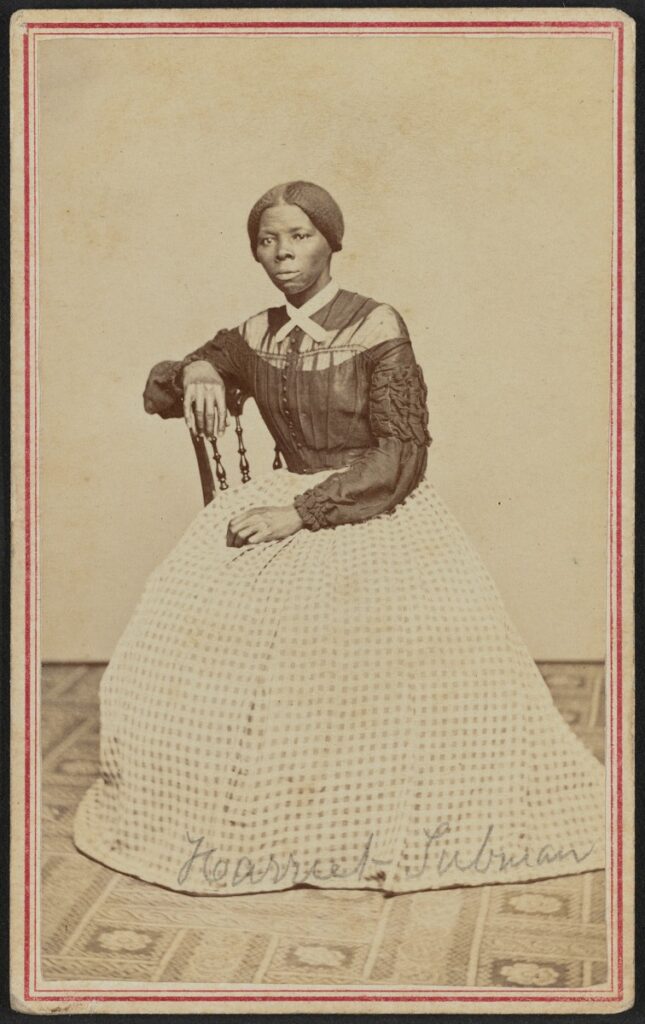
Handy, H. B. L. (c. 1871–1876) Harriet Tubman. [Photograph]. Library of Congress / Wikimedia Commons. Link
Abolitionist: Harriet Tubman is celebrated for leading more than 70 enslaved people to freedom through the Underground Railroad, earning the nickname “Moses.”
Harriet Tubman was an abolitionist and a former enslaved woman who led more than 70 people to freedom through the Underground Railroad. Known as “Moses” by those she helped, she risked her life repeatedly to guide families out of bondage. Tubman later served as a spy, nurse, and scout for the Union Army during the Civil War.
Tubman risked her life to fight slavery and later supported women’s rights and care for formerly enslaved people. Her courage and leadership show how resistance can take many forms, both public and private.
Research Tip: Students can investigate how the Underground Railroad worked and how Tubman’s faith and strategy shaped her success.
4. Frederick Douglass (1818–1895)
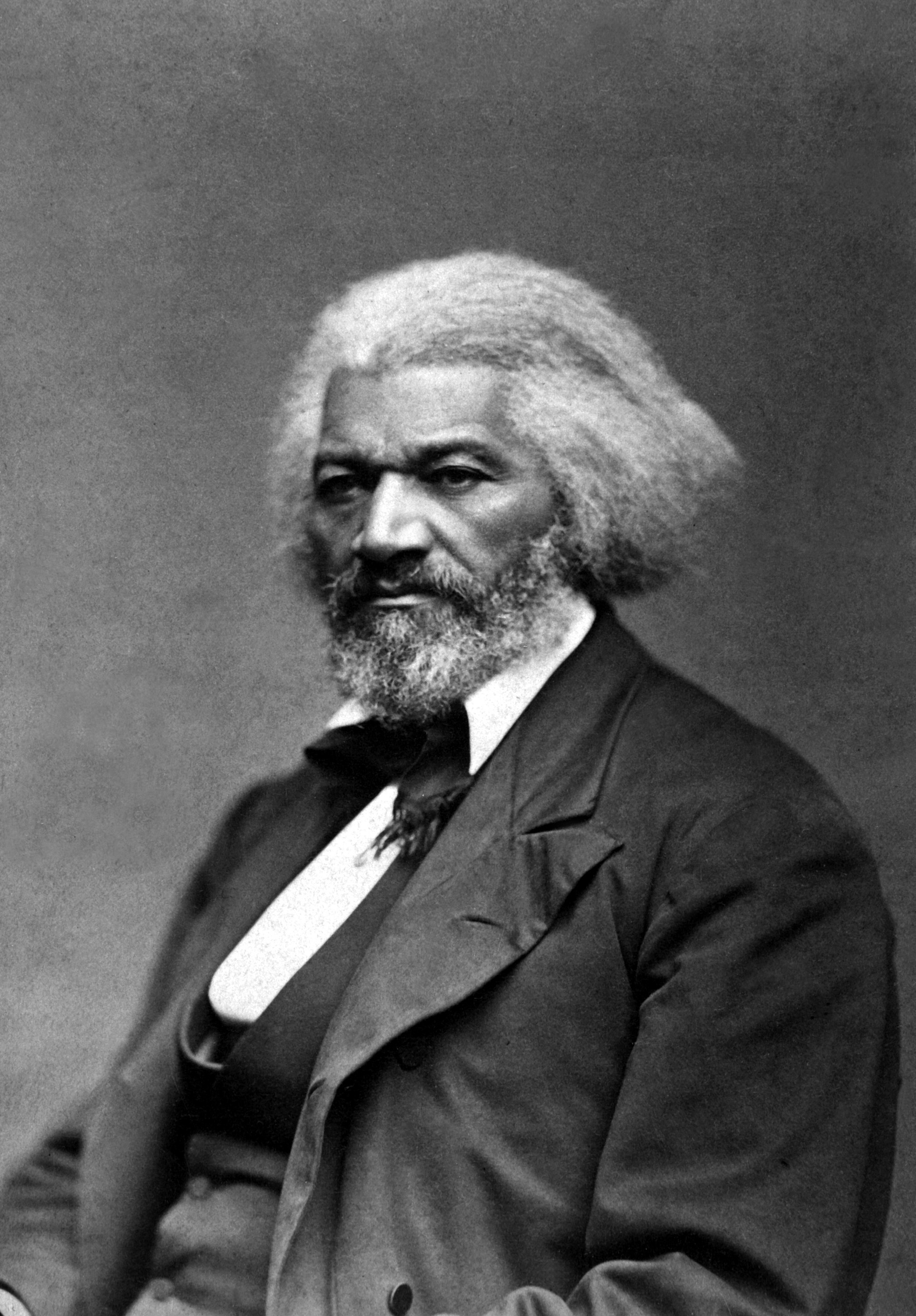
Abolitionist: Douglass is known for his powerful autobiographies and speeches that revealed the brutality of slavery to readers nationwide.
Frederick Douglass was a self-educated formerly enslaved man who became a leading abolitionist, author, and orator. His autobiographies exposed the realities of slavery, and his powerful speeches pushed for emancipation, racial equality, and women’s rights. Douglass advised presidents, fought for the 13th, 14th, and 15th Amendments, and remained a lifelong advocate for justice.
As a self-educated formerly enslaved man, Douglass became one of the most effective advocates for abolition, equal rights, and women’s suffrage. His writing remains influential in American literature and social justice thought.
Research Tip: Students can compare passages from his autobiographies to examine how storytelling can become activism.
5. Sojourner Truth (1797–1883)
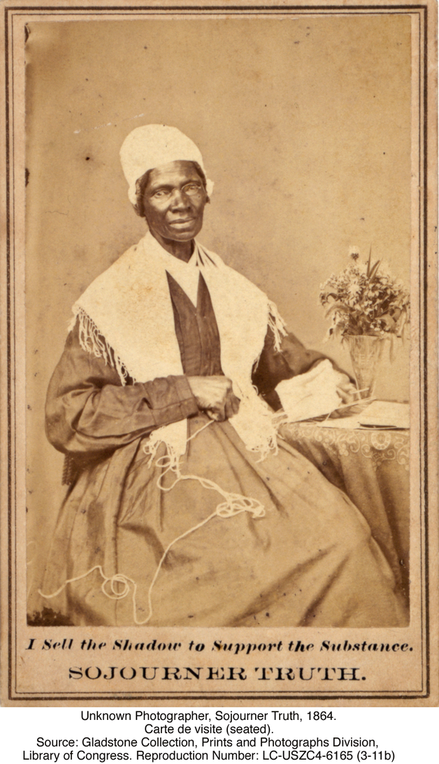
Abolitionist: Truth is remembered for her stirring “Ain’t I a Woman?” speech and her advocacy for both racial justice and women’s rights.
Sojourner Truth was an abolitionist and women’s rights advocate best known for her “Ain’t I a Woman?” speech. Born into slavery, she escaped and dedicated her life to speaking out against injustice. Truth traveled the country promoting the end of slavery, equal rights, and better conditions for formerly enslaved people. She also recruited Black troops during the Civil War and fought for land ownership rights.
She challenged both racism and sexism at a time when neither cause was widely supported, making her one of the earliest voices for intersectional equality.
Research Tip: Students can explore how Truth’s speeches addressed multiple forms of inequality at once.
6. John Lewis (1940–2020)
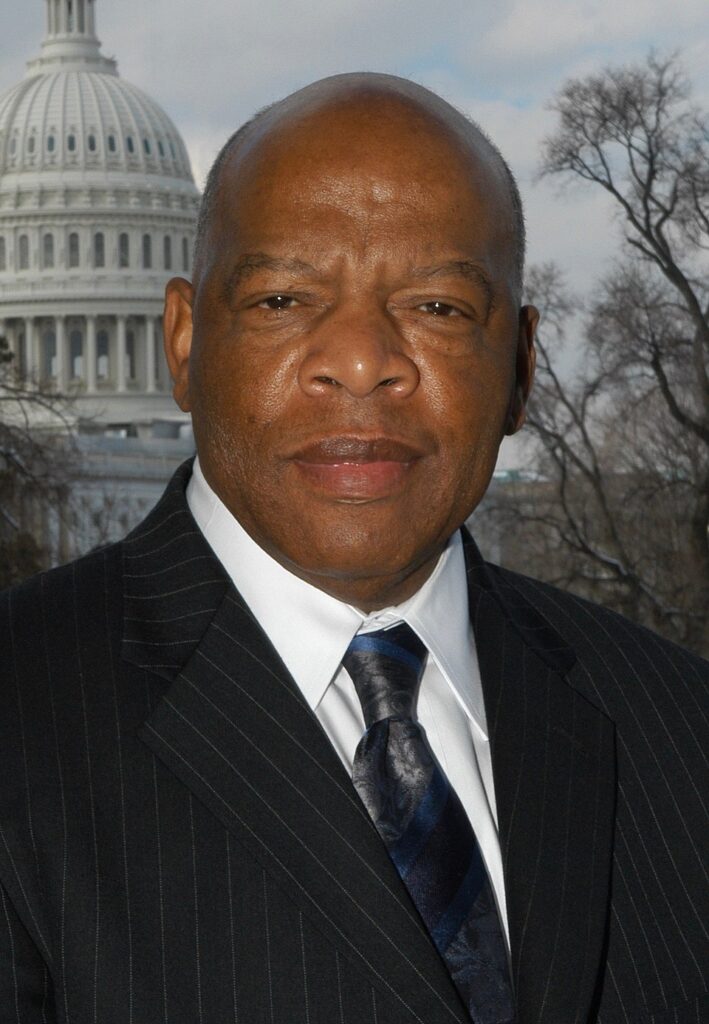
United States House of Representatives. (2006, February 13). John Lewis [Official congressional photograph] Link
Racial Equity Leader: Lewis was one of the original Freedom Riders and a leader in the Selma to Montgomery marches, enduring violence for voting rights.
John Lewis was a key organizer during the Civil Rights Movement and one of the original Freedom Riders. As chairman of the Student Nonviolent Coordinating Committee (SNCC), he helped lead the March on Washington and the Selma to Montgomery marches. Lewis endured violence and imprisonment while fighting for voting rights. Later, he served in the U.S. Congress for more than 30 years, becoming known as the “conscience of Congress.”
His lifelong commitment to justice (from the streets to the U.S. Congress) shows how activism can evolve into public service without losing moral purpose.
Research Tip: Students can examine “Good Trouble,” Lewis’s concept of when justice requires bold action.
7. Malcolm X (1925–1965)
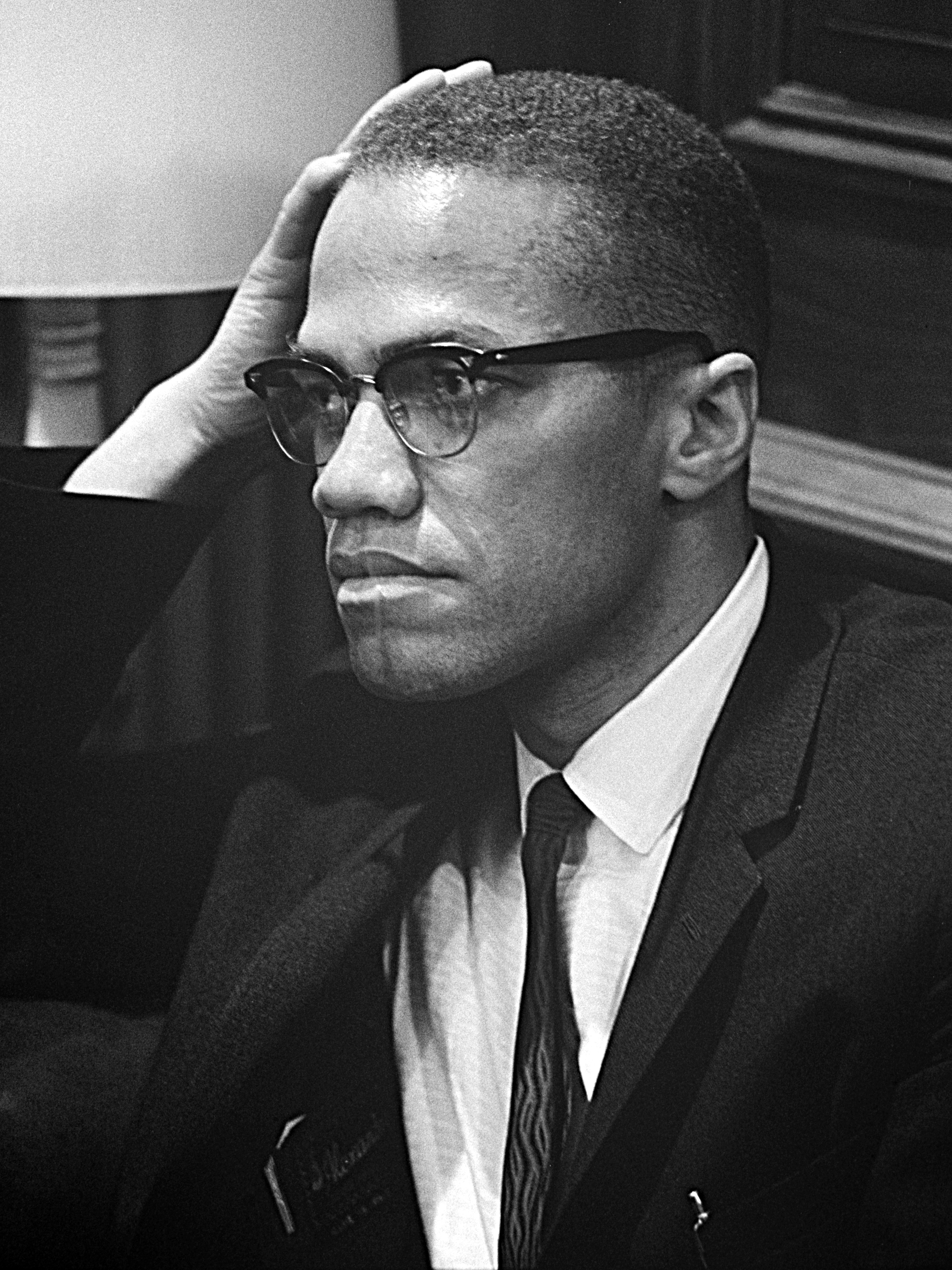
Trikosko, M. S. (1964, March 26). Malcolm X [Photograph]. U.S. News & World Report Magazine Photograph Collection, Library of Congress. Link
Racial Equity Leader: Malcolm X is known for his powerful advocacy for Black pride, self-determination, and human rights.
Malcolm X was a powerful civil rights activist who advocated for Black empowerment, self-determination, and human rights. Early in his career, he emphasized Black pride and resistance to systemic racism. After a transformative pilgrimage to Mecca, he broadened his vision and began promoting unity across racial lines. Malcolm X remains a significant figure for his bold voice and influence on modern social justice movements.
His critique of racism and call for empowerment influenced generations of activists, and his evolving worldview shows how people can grow and change through reflection.
Research Tip: Students can compare early speeches with those after his pilgrimage to understand how perspective can shift through experience.
8. Ruby Bridges (1954–present)
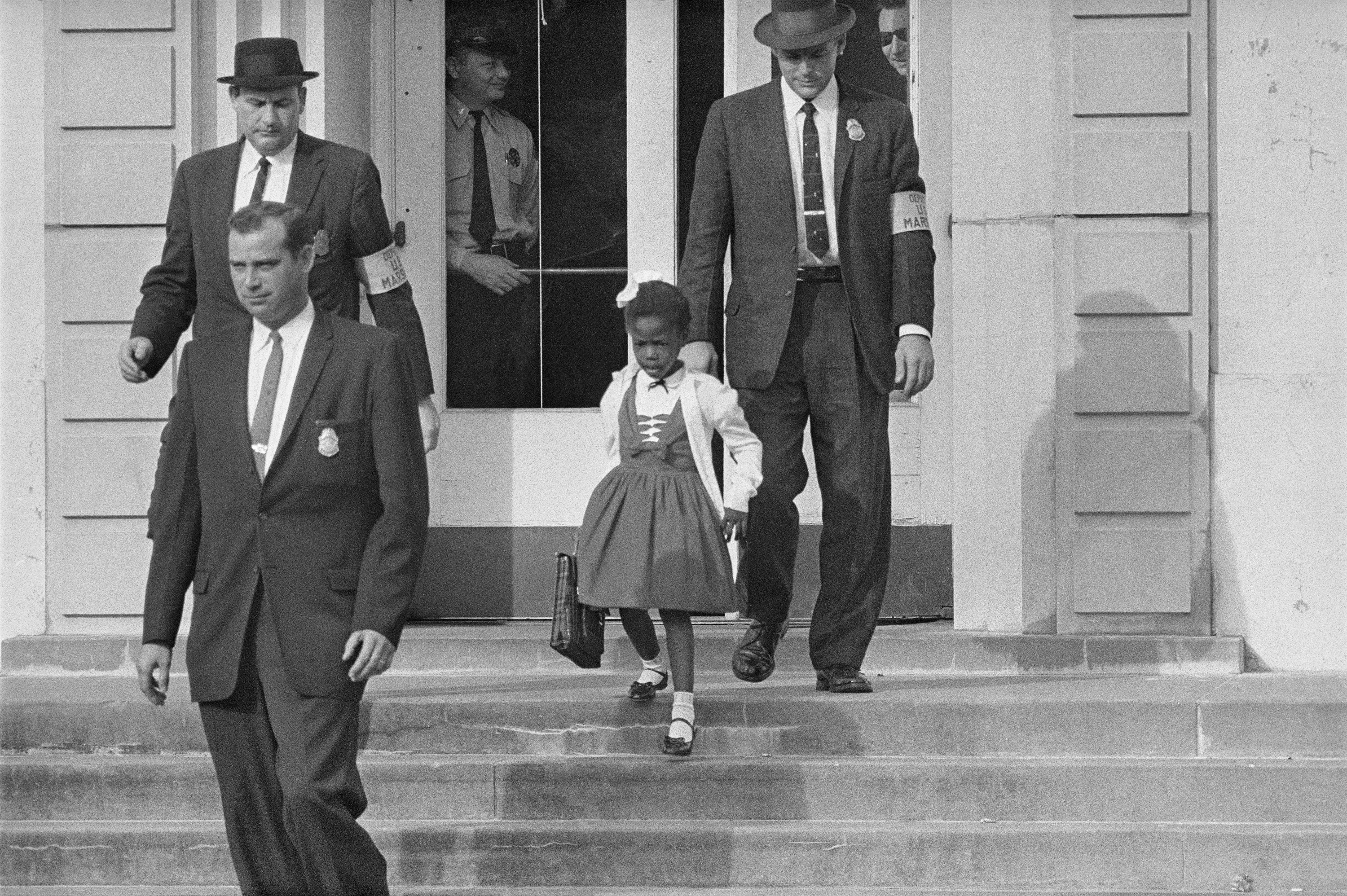
U.S. Department of Justice. (1960, c. November 14). US Marshals with young Ruby Bridges on school steps at William Frantz Elementary School [Photograph]. Wikimedia Commons. Link
Racial Equity Leader: Bridges became the first Black child to integrate an all-white school in the South at age six.
Ruby Bridges became a symbol of courage at just six years old when she became the first Black child to integrate an all-white elementary school in the South. Surrounded by angry crowds and protected by federal marshals, she attended school alone for months. Her bravery helped open doors for educational equality, and she continues to work as an activist for tolerance and anti-bullying.
Her courage under extreme hostility revealed the emotional and social realities of segregation and helped move the nation toward equal educational access.
Research Tip: Students can research how school integration affected communities beyond Little Rock and New Orleans.
9. Cesar Chavez (1927–1993)
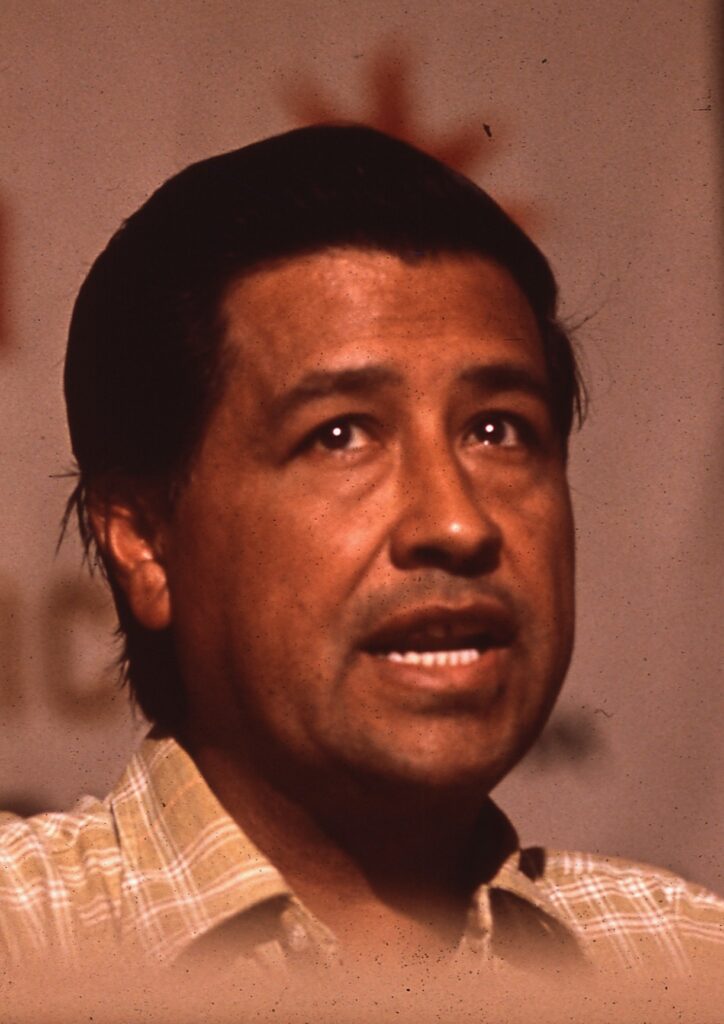
U.S. National Archives. (1972, July). César Chávez, migrant workers union leader [Photograph]. NARA / Wikimedia Commons. Link
Labor Rights Leader: Chavez co-founded the United Farm Workers and led major nonviolent campaigns for better wages and conditions.
Cesar Chavez was a labor leader who fought for the rights of farmworkers through nonviolent action. He co-founded the United Farm Workers (UFW) and led nationwide boycotts, marches, and hunger strikes to demand better wages, working conditions, and dignity for agricultural laborers. Chavez’s leadership strengthened the labor rights movement and improved conditions for millions of workers.
His work improved the lives of millions of agricultural workers and broadened the meaning of civil rights to include fair labor and dignity.
Research Tip: Students can explore how nonviolent protest works in labor movements compared to racial justice movements.
10. Dolores Huerta (1930–present)
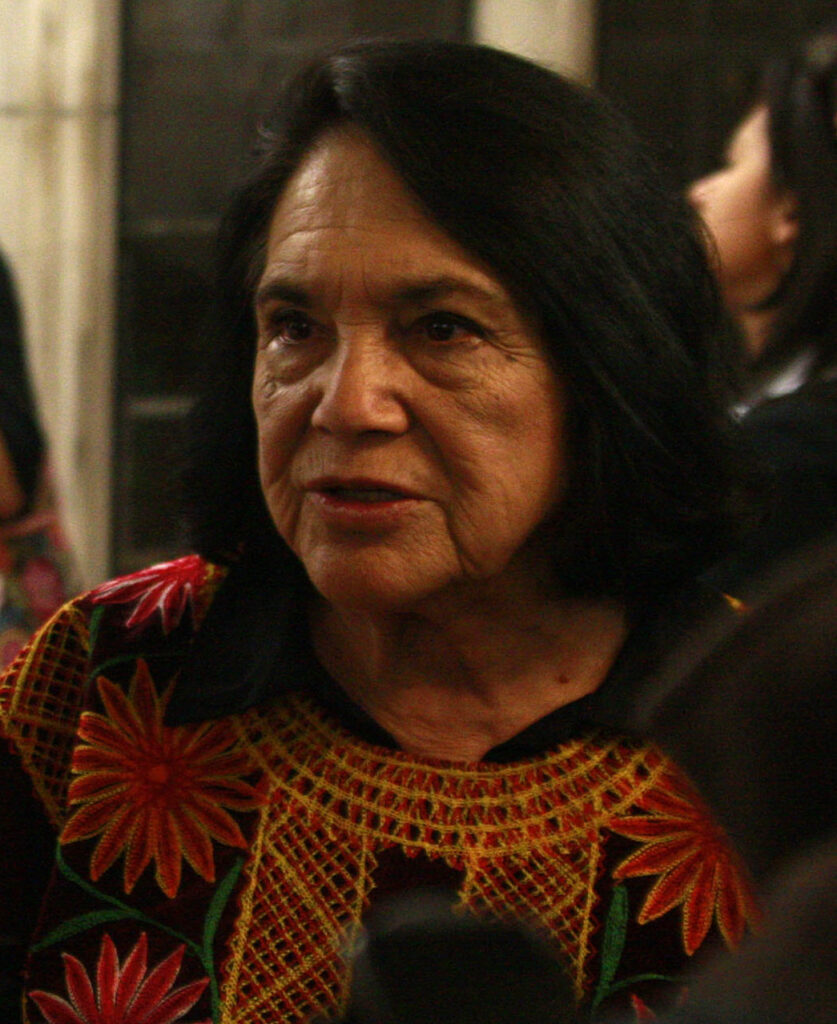
Labor Rights Leader: Huerta co-founded the United Farm Workers (UFW) and coined the phrase “Sí, se puede,” now a global slogan for empowerment.
Dolores Huerta is a civil rights and labor activist who co-founded the United Farm Workers alongside Cesar Chavez. She organized strikes, negotiated contracts, and fought for labor protections, especially for migrant workers. Huerta coined the phrase “Sí, se puede” (“Yes, we can”), which became a national rallying cry. She remains an influential advocate for women’s rights, education, and economic justice.
She fought for migrant workers, women, and families, demonstrating how labor and human rights are deeply connected.
Research Tip: Students can research how Huerta’s organizing strategies differed from those of other labor leaders.
11. Nelson Mandela (1918–2013)
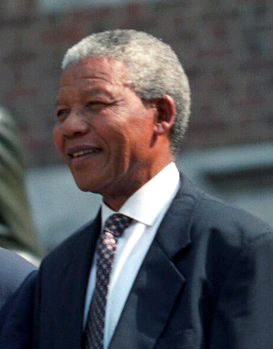
White House Photograph Office, Clinton Administration. (1993, July 4). Nelson Mandela at Independence Hall, Philadelphia [Photograph]. Wikimedia Commons. Link
Global Civil Rights Leader: Mandela led the fight against South Africa’s apartheid system and became the nation’s first Black president after spending 27 years in prison.
Nelson Mandela was a South African anti-apartheid leader who spent 27 years in prison for resisting racial segregation. After his release, he led negotiations to end apartheid and became South Africa’s first Black president.
His advocacy earned him the Nobel Peace Prize and global recognition as a symbol of forgiveness and justice.
Mandela’s commitment to justice, reconciliation, and democracy helped transform an entire country. His leadership showed the world how courage and forgiveness can shape a nation’s future.
Research Tip: Students can look into the Truth and Reconciliation Commission to learn how countries heal after injustice.
12. Mary Church Terrell (1863–1954)
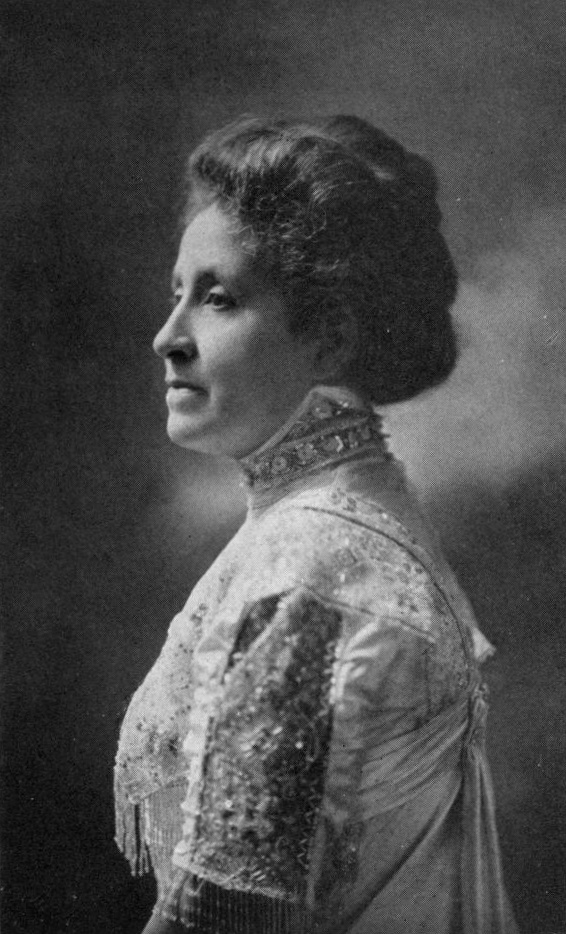
Scurlock, A. N. (c. 1919). Mary Church Terrell [Photograph]. Wikimedia Commons. Link
Racial Equity Leader: Terrell was a founder of the National Association of Colored Women and a powerful voice for education, suffrage, and civil rights.
Mary Church Terrell was a Black educator, activist, and one of the first Black women to earn a college degree. She used her education and status to advocate for racial equality and women’s rights. Terrell co-founded the National Association of Colored Women (NACW) and worked tirelessly to advance civil liberties, public education, and voting rights for African Americans.
She championed the rights of Black women at a time when both racism and sexism limited opportunities. Her work helped bridge racial justice and women’s suffrage movements.
Research Tip: Students can explore how Terrell used both activism and education to create lasting change.
13. W.E.B. Du Bois (1868–1963)
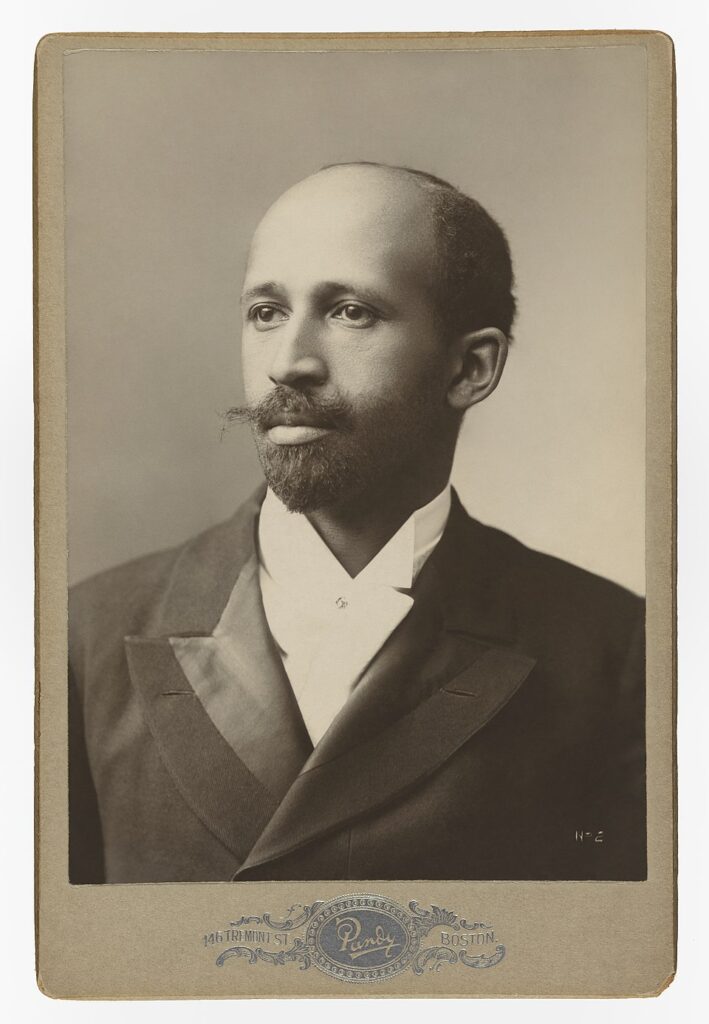
Racial Equity Leader: Du Bois co-founded the NAACP and was one of the earliest scholars to document how racism shaped American life.
W.E.B. Du Bois was a scholar, sociologist, and co-founder of the NAACP. He was one of the first major Black academics to document the effects of racism. Du Bois advocated for political representation, higher education, and civil rights, often disagreeing with more gradual approaches to equality. His writings helped form the foundation of modern African American studies.
His writings laid the foundation for civil rights research, African American studies, and political advocacy. Du Bois argued for full equality and higher education when society demanded patience and compromise.
Research Tip: Students can compare Du Bois’s ideas with Booker T. Washington to understand early debates in civil rights strategy.
14. Ida B. Wells (1862–1931)
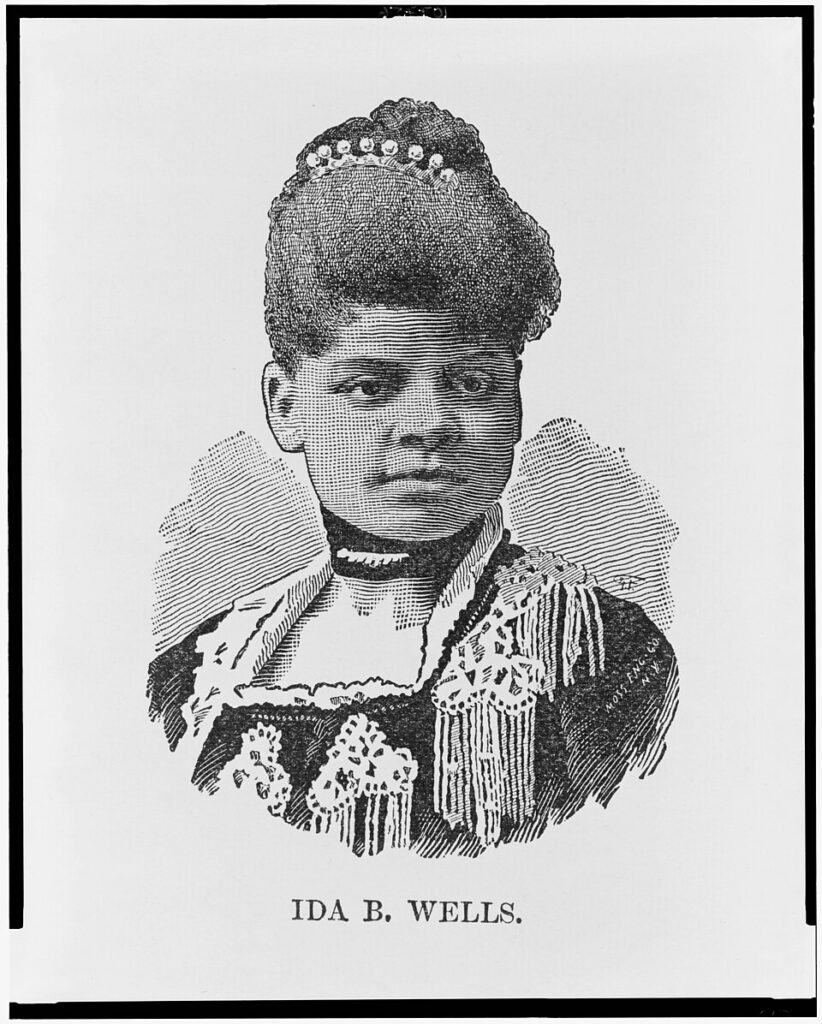
Library of Congress. (1891). Ida B. Wells, head-and-shoulders portrait, facing slightly right [Photograph]. Wikimedia Commons. Link
Racial Justice Leader: Wells was a journalist who documented and exposed the brutal reality of lynching when few dared to speak publicly about it.
Ida B. Wells was a fearless journalist, educator, and anti-lynching activist who used investigative writing to expose racial violence and injustice across the United States. At great personal risk, she documented lynchings and challenged the myths used to justify them, forcing Americans to confront brutal realities they preferred to ignore. Wells co-founded the NAACP and also fought for women’s suffrage, making her one of the earliest and most influential advocates for both racial and gender equality. Her courage and reporting remain cornerstones of social justice journalism.
Her reporting forced the nation to confront racial violence and helped shape investigative journalism. She also fought for women’s rights, making her a true pioneer across multiple civil rights movements.
Research Tip: Students can research how Wells used data, statistics, and interviews (rare at the time) to build her case against lynching.
15. Fannie Lou Hamer (1917–1977)
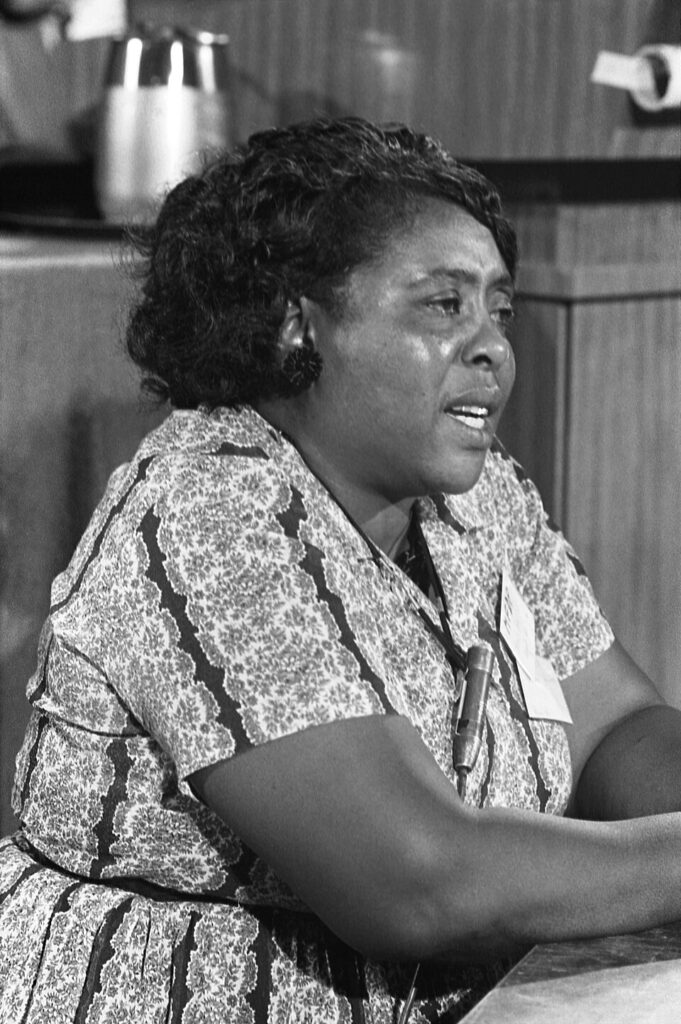
Leffler, W. K. (1964, August 22). Fannie Lou Hamer at the Democratic National Convention, Atlantic City, New Jersey [Photograph]. U.S. News & World Report Magazine Photograph Collection, Library of Congress / Wikimedia Commons. Link
Voting Rights Activist: Hamer co-founded the Mississippi Freedom Democratic Party and delivered a historic national address exposing racism in the voting system.
Fannie Lou Hamer was a voting rights activist who helped lead the Mississippi Freedom Democratic Party. After facing violence and intimidation when trying to register to vote, she became a national voice for racial justice. Hamer organized voter registration drives, worked with the Student Nonviolent Coordinating Committee (SNCC), and delivered a historic speech at the 1964 Democratic National Convention that exposed the realities of Southern racism.
Her bravery, despite violence and intimidation, brought national attention to voter suppression and helped drive voting rights reforms.
Research Tip: Students can analyze her 1964 Democratic National Convention (DNC) speech to see how personal testimony can influence political change.
16. Bayard Rustin (1912–1987)
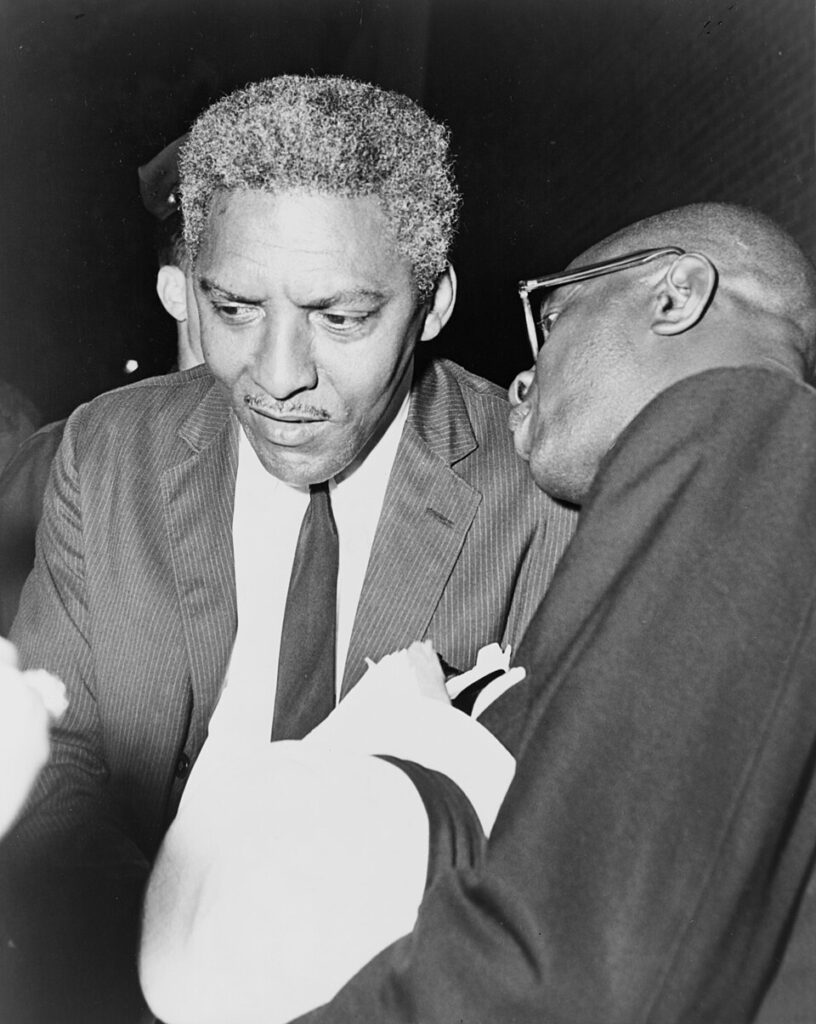
Wolfson, S. (1964). Bayard Rustin [Photograph]. Library of Congress, New York World-Telegram & Sun Photograph Collection. Wikimedia Commons. Link
Nonviolent Communication/Racial Equity Leader: Rustin was the chief organizer of the 1963 March on Washington and a key strategist behind the scenes in the Civil Rights Movement.
Bayard Rustin was a strategist, organizer, and key advisor to Martin Luther King Jr. He was the chief architect of the 1963 March on Washington. Rustin championed nonviolence, worker rights, and peace. Because he was openly gay at a time of deep prejudice, he often worked behind the scenes, but his contributions shaped the Civil Rights Movement.
As a gay man in a deeply discriminatory era, Rustin shaped major civil rights victories while navigating prejudice. His work shows how intersectional identities influence social justice movements.
Research Tip: Students can study how Rustin blended nonviolence, labor rights, and racial equality into a unified strategy.
17. Ella Baker (1903–1986)
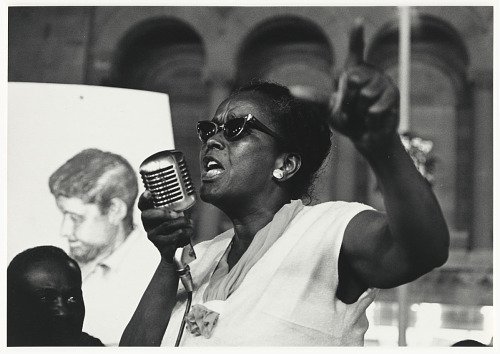
Grassroots Leader: Baker mentored young activists and helped launch the Student Nonviolent Coordinating Committee (SNCC), one of the most influential student-led civil rights groups.
Ella Baker was a behind-the-scenes organizer who believed in grassroots leadership. As a mentor to young activists, she helped form the Student Nonviolent Coordinating Committee (SNCC). Baker encouraged community-based activism rather than top-down leadership.
She believed true change came from empowering everyday people, not just top leaders. Her philosophy of grassroots leadership shaped sit-ins, Freedom Rides, and modern organizing strategies.
Research Tip: Students can explore the difference between “leader-centered” vs. “people-centered” organizing using Baker’s work as a model.
18. A. Philip Randolph (1889–1979)
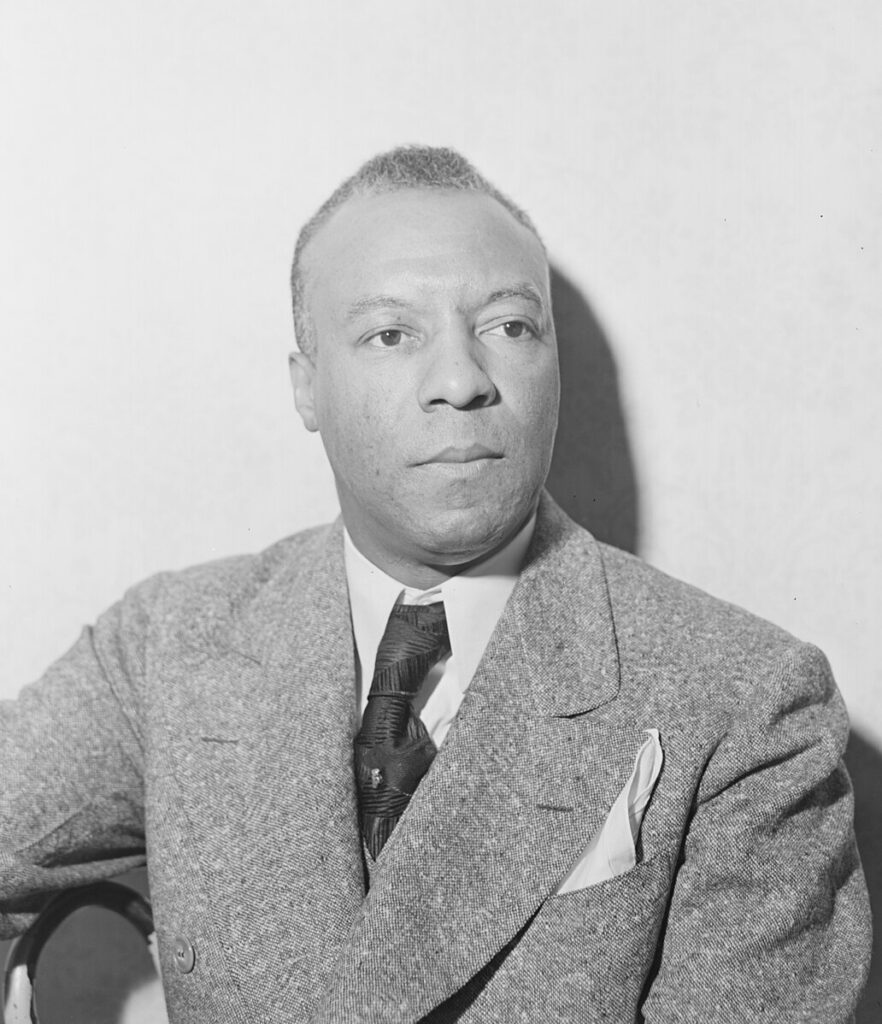
Labor Rights Leader: Randolph founded the Brotherhood of Sleeping Car Porters (the first major Black labor union) and helped organize the 1963 March on Washington.
A. Philip Randolph was a labor leader and civil rights activist who founded the Brotherhood of Sleeping Car Porters, the first successful Black labor union. He pressured presidents to desegregate the military and expand job opportunities. Randolph also helped organize the 1963 March on Washington, influencing major civil rights legislation.
He fought for fair wages, equal opportunity, and desegregation long before the Civil Rights Movement gained national attention. His work shows how economic justice and racial justice are inseparable.
Research Tip: Students can research how Randolph pressured presidents to address racial discrimination in the military and workforce.
19. James Baldwin (1924–1987)
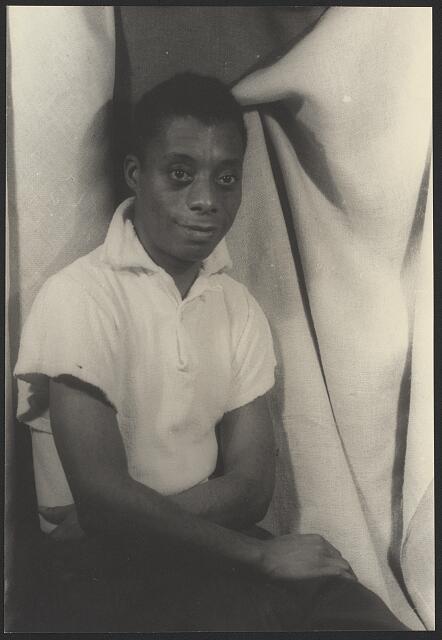
Van Vechten, Carl, photographer. Portrait of James Baldwin. 1955, Sept. 13. Gelatin silver print. Library of Congress Control Number 2004662552. Link
Author: Baldwin wrote groundbreaking novels and essays that examined racism, identity, and the human experience during the Civil Rights era.
James Baldwin was an author and activist whose essays, novels, and speeches explored race, identity, and inequality in America. His writing challenged readers to confront injustice and empathize with others. Baldwin became a key voice during the Civil Rights Movement and remains widely studied for his insight into race relations.
His ability to combine storytelling, social critique, and compassion made him one of the most important voices in American literature and activism. His work remains widely taught in schools today.
Research Tip: Students can compare Baldwin’s essays to understand how he used personal narrative to illuminate national issues.
20. Marsha P. Johnson (1945–1992)
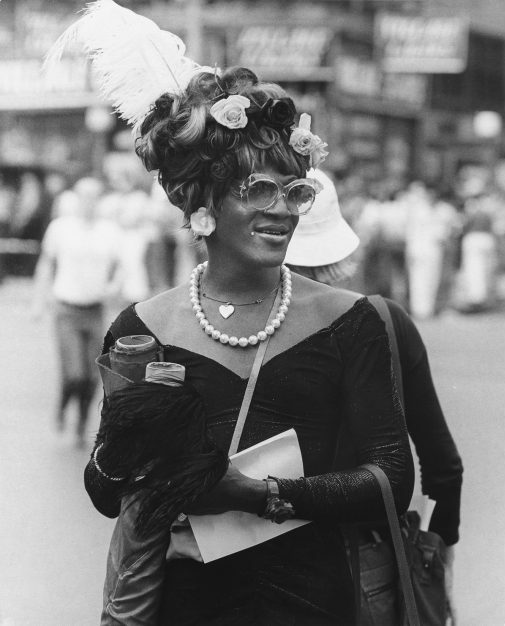
Marsha P. Johnson, 1970s. Photograph by Hank O’Neal. Public domain (Published between 1930–1977). Link
Gay Rights Leader: Johnson was a leading figure in the Stonewall uprising and co-founded organizations supporting homeless queer youth and people with AIDS.
Marsha P. Johnson was an LGBTQ+ activist known for her bold visibility, joy, and unwavering commitment to people pushed to the margins of society. As a Black transgender woman, she became one of the most recognizable figures in the Stonewall uprising of 1969, an event widely viewed as the spark that ignited the modern gay rights movement. Johnson co-founded the Street Transvestite Action Revolutionaries (STAR), providing housing, food, and safety to homeless LGBTQ+ youth and people living with AIDS at a time when society offered them little protection or support. Johnson’s activism was grounded not only in protest but in daily care for people often forgotten by mainstream movements.
Johnson expanded the meaning of civil rights to include gender identity, sexual orientation, and the right to safety and dignity for people who faced violence and discrimination even within their own communities. Her life shows how activism can take the form of both public protest and personal support, and why visibility can be a form of courage.
Research Tip: Students can research how Johnson’s activism intersected with the early AIDS crisis.
21. Mahatma Gandhi (1869–1948)
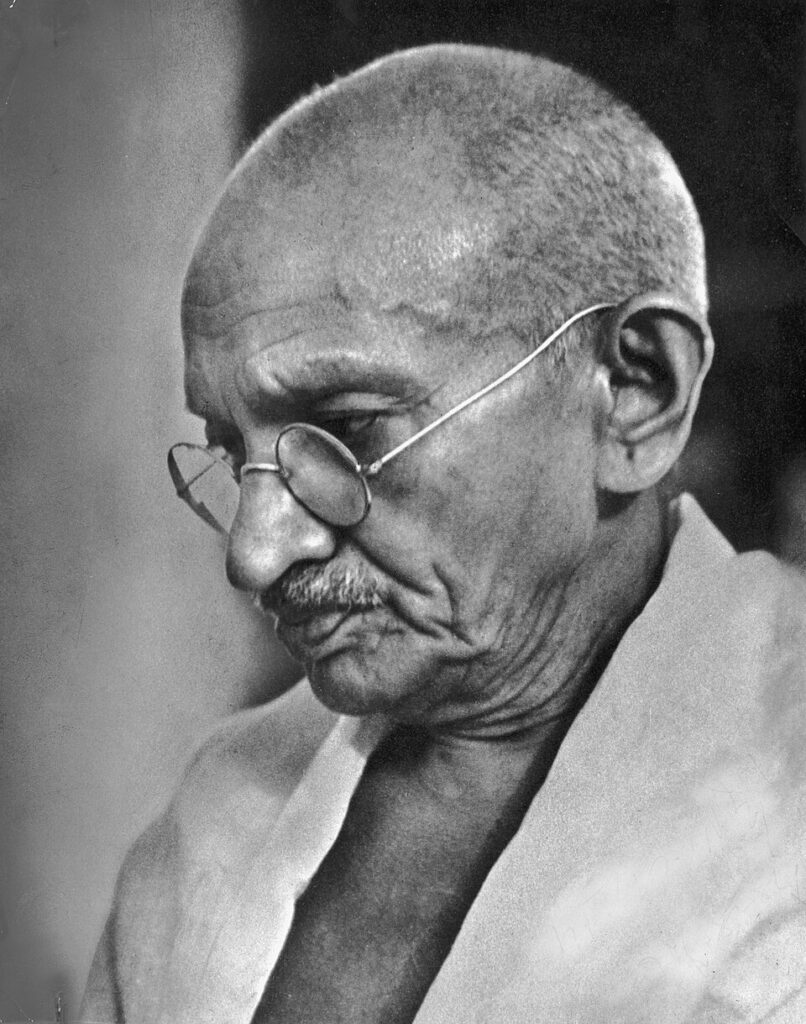
Gandhi portrait, 1940. Unknown author. Public domain, Wikimedia Commons. Link
Nonviolent Communication: Gandhi was a leader of India’s nonviolent independence movement who pioneered mass civil disobedience against British rule.
Mahatma Gandhi was an Indian lawyer and activist whose philosophy of nonviolence (ahimsa) and civil disobedience transformed both his country and the world. Gandhi organized mass campaigns against British colonial rule, including the famous Salt March, in which thousands marched to the sea to protest unjust laws. His approach relied on moral courage, discipline, and peaceful protest even in the face of violence, inspiring millions to participate in political action without resorting to hatred or harm. Gandhi’s work eventually helped lead India to independence in 1947 and demonstrated the power of peaceful collective action in shaping national destiny.
Gandhi created a practical, effective model for how oppressed people can demand justice without reproducing cycles of violence. His ideas directly influenced global movements, including the American Civil Rights Movement, South African anti-apartheid activism, and many modern human-rights campaigns. Gandhi’s philosophy of nonviolent resistance directly influenced Martin Luther King Jr., Nelson Mandela, and others fighting oppression. Today, his philosophy remains central in conversations about ethics, protest, and social change.
Research Tip: Students can examine the Salt March to understand how peaceful protest can create national and international pressure for change.
22. Desmond Tutu (1931–2021)
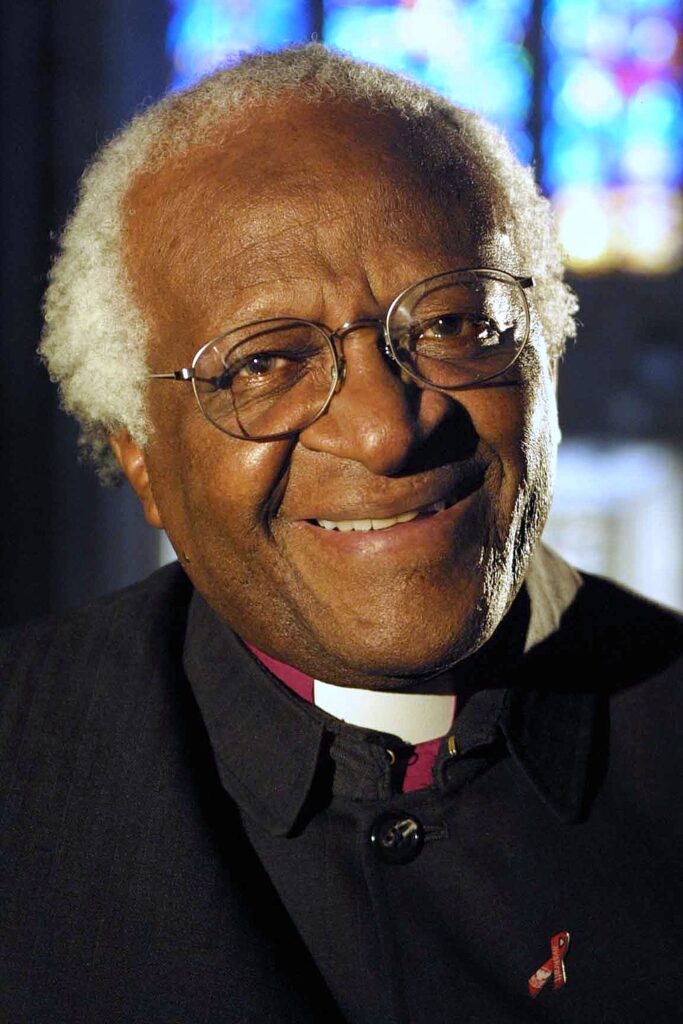
Photograph by Benny Gool, circa 2004. Archbishop-Tutu-medium.jpg, Wikimedia Commons, public domain. Link
Racial Equity Leader: Tutu was a South African Anglican bishop and human rights activist who became one of the strongest moral voices against apartheid.
Desmond Tutu was a South African bishop and anti-apartheid leader who promoted nonviolent resistance and reconciliation. Tutu used his global influence to pressure governments, churches, and institutions to oppose apartheid. After its fall, he chaired the Truth and Reconciliation Commission, helping South Africa confront injustice through restorative rather than retributive justice and helping the nation heal.
Tutu was awarded the Nobel Peace Prize for his efforts to end racial segregation and promote human rights.
Research Tip: Students can explore how Tutu balanced activism with faith leadership—and compare the Truth and Reconciliation model to other post-conflict justice systems.
23. Susan B. Anthony (1820–1906)
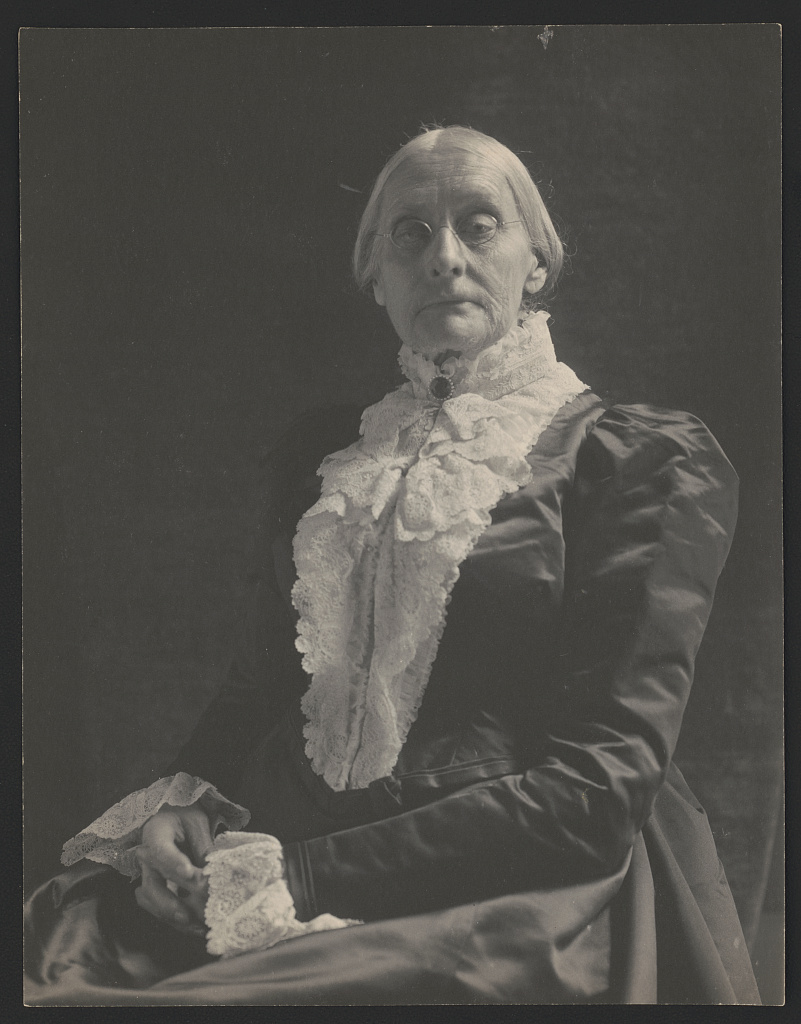
Johnston, Frances Benjamin, photographer. Susan B. (Susan Brownell) Anthony, 1820-1906. [between 1900 and 1906]. Photograph. Library of Congress, Prints & Photographs Division. Digital ID 2001704086. Link
Women’s Rights Leader: Susan B. Anthony was one of the most influential leaders of the women’s suffrage movement in the United States.
Susan B. Anthony was a leading figure in the women’s suffrage movement and one of the most influential civil rights activists in American history. She fought for women’s right to vote, equal pay, property rights, and legal equality. For decades, she organized campaigns, gave powerful speeches, and worked tirelessly to secure women’s right to vote. She co-founded the National Woman Suffrage Association and spent decades organizing petitions, delivering speeches, and lobbying lawmakers. In 1872, she famously voted illegally, leading to her arrest and a widely publicized trial that galvanized the movement.
Anthony challenged unfair laws, helped form key suffrage organizations, and pushed the nation toward recognizing women as equal citizens under the law. Her efforts eventually led to the passage of the 19th Amendment, granting women the right to vote. Her unwavering determination helped shift public opinion and set the stage for future gender equality movements.
Research Tip: Students can explore Anthony’s speeches and trial transcripts to understand how civil disobedience played a critical role in advancing women’s rights.
24. Margaret Knight (1838–1914)
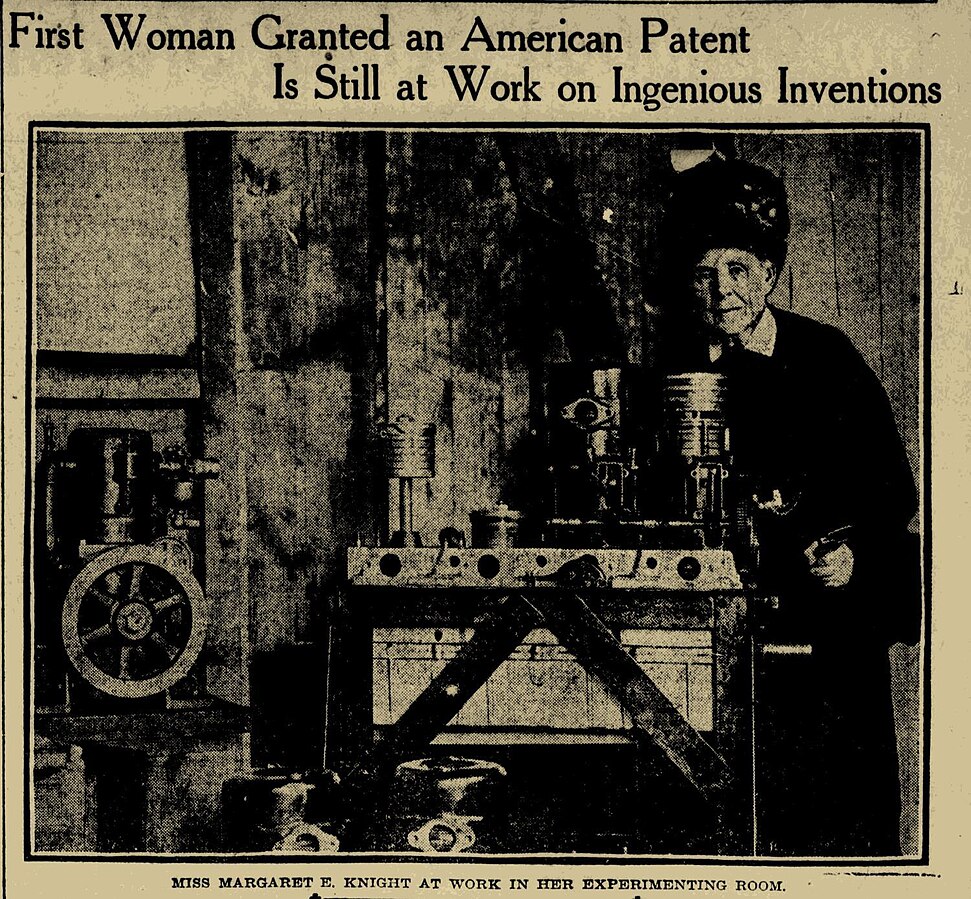
Boston Sunday Post. (1912, March 31). Miss Margaret E. Knight at work in her experimenting room [Photograph]. Wikimedia Commons. Link
Women’s Rights Leader: Margaret E. Knight is often called “the most famous woman inventor of the 19th century” and broke barriers in a male-dominated field.
Margaret Knight was a groundbreaking inventor and a pioneer for women in science and engineering during the 19th century. When a man attempted to steal her paper bag invention (the machine that makes flat-bottomed paper bags) by claiming women couldn’t understand mechanical engineering, Knight took him to court and won the patent, becoming a symbol of women’s capabilities in STEM fields. Best known for inventing the paper bag machine, she held more than 20 patents in an era when women were seldom encouraged or allowed to participate in technical fields. She went on to produce numerous industrial innovations in machinery and manufacturing.
While not a traditional civil rights activist, her life and work significantly advanced equality and expanded opportunities for women. Knight’s persistence, creativity, and success challenged gender barriers and opened doors for future generations of women in STEM.
Knight matters because she challenged gender stereotypes while reshaping American manufacturing. Her story highlights both the contributions of women inventors and the barriers they faced in securing recognition and legal protection for their work.
Research Tip: Students can examine the legal battle over Knight’s stolen patent as a window into gender discrimination in the 1800s and the development of patent law.
25. Julian Bond (1940–2015)
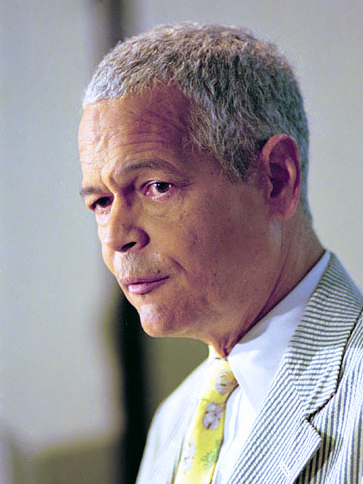
Unknown photographer. (c. 2000s). Julian Bond [Photograph]. Wikimedia Commons. Link
Racial Equity & Voting Rights Leader: Julian Bond was a major civil rights activist, NAACP chairman, and one of the most influential voices in the fight for racial and political equality.
Julian Bond was a prominent civil rights leader, educator, and politician who played a major role in the fight for racial equality in the United States. As a young man, he helped found the Student Nonviolent Coordinating Committee (SNCC), which organized sit-ins, Freedom Rides, and voter registration efforts across the South. Bond later served in the Georgia state legislature, using his voice to advocate for civil rights, social justice, and fair representation.
Bond dedicated his life to racial justice, voting rights, and political representation. His leadership helped strengthen the Black freedom movement from the 1960s through the 21st century. Known for his eloquence, humor, and moral clarity, Julian Bond remains an enduring example of lifelong commitment to equality and democratic ideals.
Research Tip: Students can explore Bond’s early SNCC writings and speeches to understand how student-led activism shaped national civil rights and voting legislation.
26. Angela Davis (1944-present)
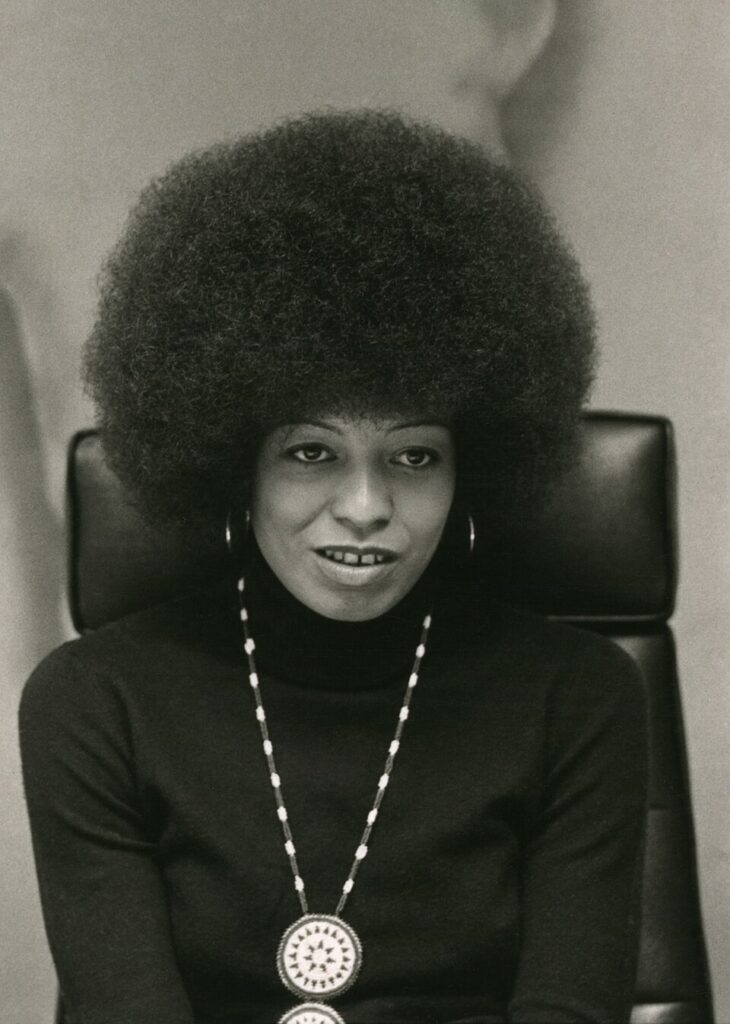
Gotfryd, B. (1974). Angela Davis [Photograph]. Library of Congress / Wikimedia Commons. Link
Women’s Rights Leader: Angela Davis is a scholar, activist, and global human rights advocate whose work links racial justice, feminism, and prison reform.
Angela Davis is a scholar, educator, and activist best known for her uncompromising work against racial oppression, prison reform, and gender inequality. In the late 1960s and 1970s, Davis became a national symbol of resistance after being targeted, arrested, and later acquitted in a highly publicized case connected to her activism. Throughout her career, she has written widely on the connections between race, capitalism, gender, and incarceration, arguing that systems of punishment and inequality are deeply intertwined. Her books, lectures, and teaching have influenced student movements, abolitionist thought, and modern feminist theory.
Davis broadened the meaning of civil rights beyond segregation and voting rights to include how societies treat the poor, the incarcerated, women, and LGBTQ+ people. Her work encourages people to think critically about how justice systems function and whom they actually protect. Today, her writing and activism continue to inspire movements for prison reform, gender equality, and racial justice worldwide.
Research Tip: Students can study Davis’s book Women, Race & Class to explore how she connects gender, race, and economic justice within civil rights history.
27. Thurgood Marshall (1908–1993)
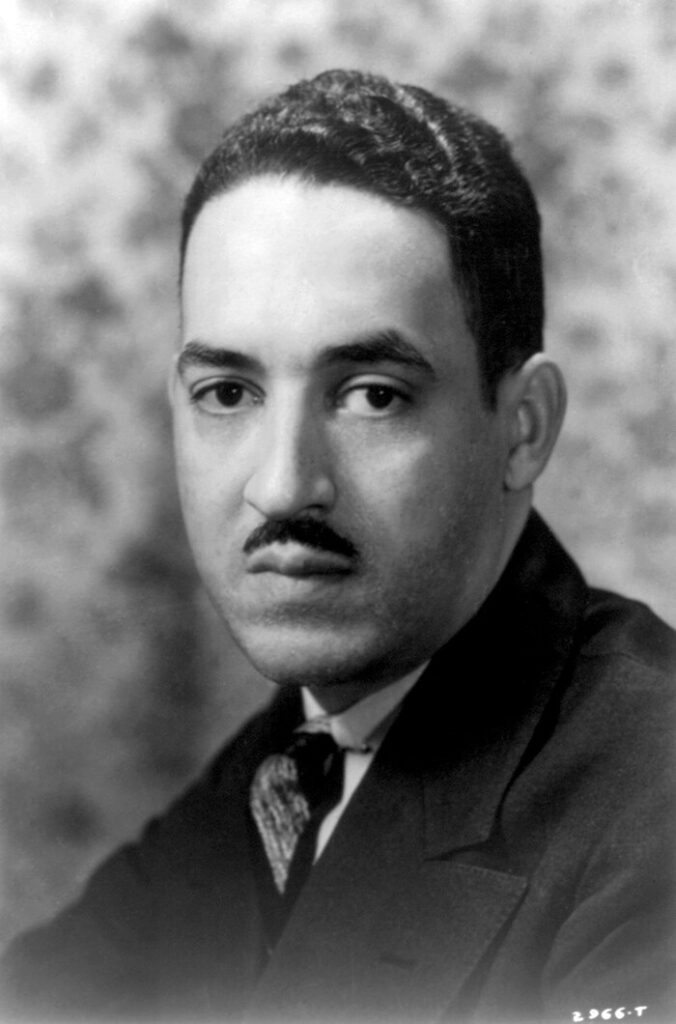
Unknown photographer. (c. 1935–1940). Thurgood Marshall [Photograph]. Wikimedia Commons. Link
Racial Equity Leader: Thurgood Marshall was the first African American U.S. Supreme Court Justice and one of the most influential legal strategists of the Civil Rights Movement.
Thurgood Marshall was a groundbreaking civil rights lawyer and the first Black justice to serve on the United States Supreme Court. As the chief counsel for the NAACP Legal Defense Fund, he argued and won the landmark case Brown v. Board of Education, which declared school segregation unconstitutional and transformed the fight for equality in America. Throughout his career, Marshall dedicated himself to protecting civil liberties, expanding equal protection under the law, and challenging discrimination.
Marshall matters because his legal victories dismantled the doctrine of “separate but equal” and transformed American education, law, and civil rights. His work reshaped the Constitution’s role in protecting equality. His legal legacy continues to shape civil rights and justice today.
Research Tip: Students can examine Marshall’s oral arguments in Brown v. Board to see how he used constitutional law to attack segregation—and compare his legal strategy to later civil rights cases.
28. Diane Nash (1938–present)
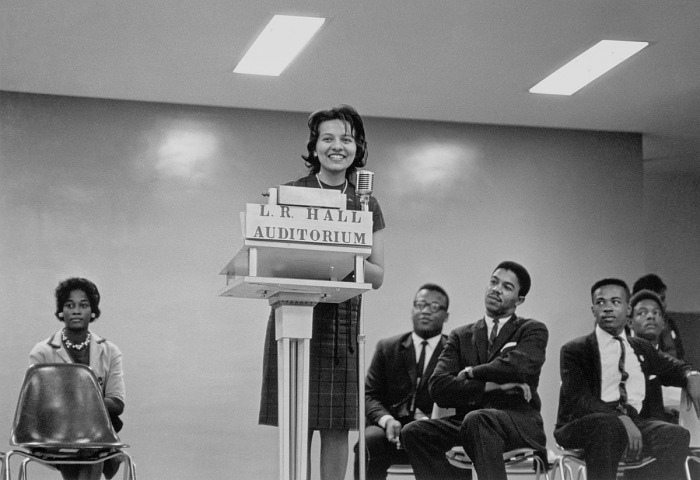
Smithsonian Institution. (1962). Diane Nash at SCLC Convention [Photograph]. Smithsonian National Museum of African American History and Culture collection. Link
Racial Justice Leader: Diane Nash was a key strategist of the Civil Rights Movement and one of the most influential student leaders in campaigns for desegregation and voting rights.
Diane Nash was a student leader and organizer during the Civil Rights Movement. She played a leading role in the Nashville Student Movement while at university — organizing sit-ins and protests against segregation. Nash helped organize the Selma voting rights campaign and worked to advance nonviolent protest as a powerful tool for change. Nash later helped coordinate the Freedom Rides and trained young civil-rights activists in nonviolent direct action. Her courage and leadership at a young age make her a powerful example of youth activism in American civil-rights history.
Nash shaped some of the most important civil rights strategies of the 1960s and demonstrated how young people could lead national movements through discipline, courage, and commitment to nonviolence.
Research Tip: Students can research Nash’s leadership during the Nashville sit-ins to see how disciplined nonviolent training prepared activists for real-world confrontation and change.
29. Dorothy Height (1912–2010)
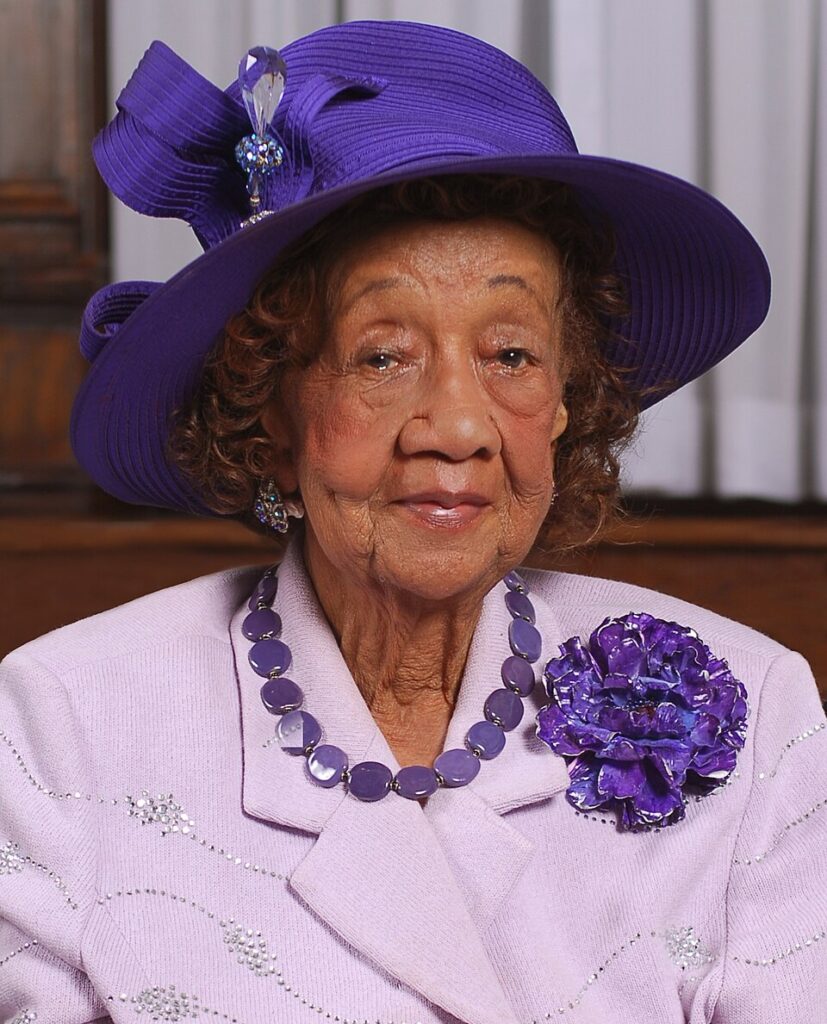
Hood, A. (2008, June 18). Dorothy Height [Photograph]. Wikimedia Commons. Link
Women’s Rights & Racial Justice Leader: Dorothy Height was a central figure in both the Civil Rights Movement and the women’s rights movement, often called the “Godmother of the Civil Rights Movement.”
Dorothy Height became a major voice for Black women’s civil rights and social justice. As longtime head of the National Council of Negro Women (NCNW), she advocated for educational opportunities, justice, and the eradication of racism and sexism. She worked closely with Martin Luther King Jr., Whitney Young, and other major leaders, yet often operated behind the scenes because women were frequently excluded from the public spotlight. Height played a major role in organizing the March on Washington, advocating against lynching, and leading campaigns for school desegregation and economic justice. Height was a prominent organizer, including at major civil-rights demonstrations, and worked to ensure that Black women’s issues stayed visible in broader civil-rights conversations.
Height championed the intersection of race and gender long before the term “intersectionality” existed. Her leadership helped secure greater rights for Black women and laid the groundwork for future women’s equality movements.
Research Tip: Students can explore Height’s work with the NCNW to understand how community-based organizing—often led by women—supported the broader civil rights agenda.
30. Pauli Murray (1910–1985)
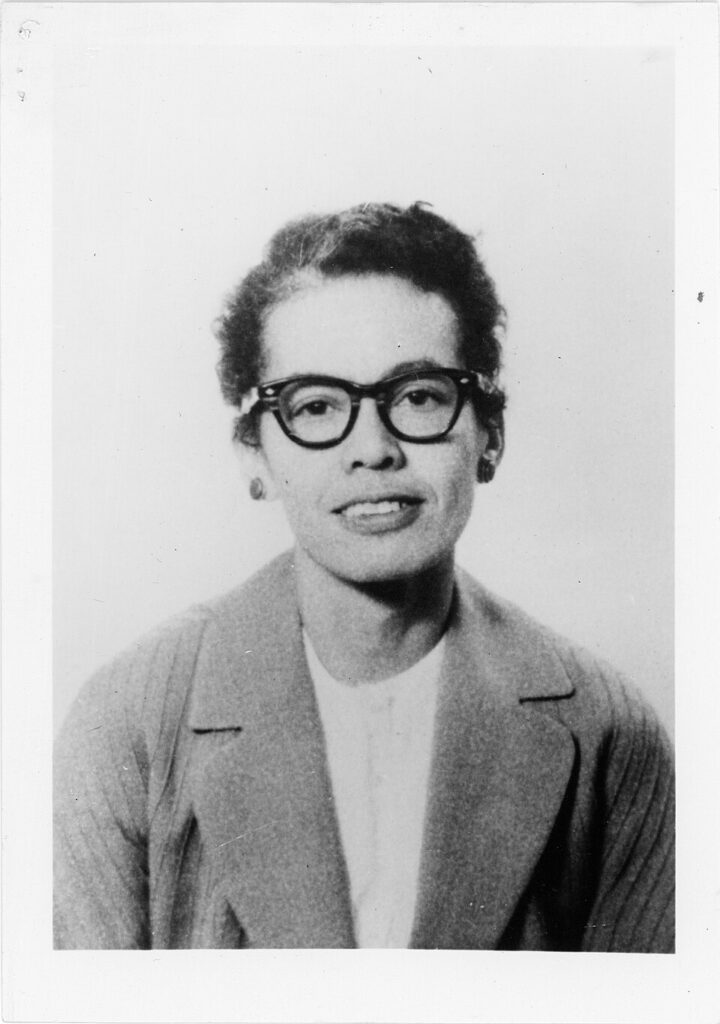
FDR Presidential Library & Museum. (2014, January 7). Portrait of Dr. Pauli Murray [Photograph]. Wikimedia. Link
Women’s Rights Leader: Pauli Murray was a groundbreaking legal strategist, writer, and activist whose ideas shaped both the Civil Rights Movement and the modern women’s rights movement.
Pauli Murray was a groundbreaking lawyer, poet, and civil rights activist whose work helped shape modern equality law in the United States. Murray co-founded the National Organization for Women (NOW), became the first Black person to earn a JSD from Yale Law School, and was later the first Black woman ordained as an Episcopal priest. Their legal arguments against “Jane Crow,” the dual discrimination faced by Black women, influenced Thurgood Marshall’s strategy in Brown v. Board of Education. They were also a key legal scholar whose arguments against “sex” discrimination influenced the wording of Title VII of the Civil Rights Act.
As a feminist, anti-racism activist, and LGBTQ+ trailblazer, Murray challenged multiple systems of inequality and expanded the scope of civil rights advocacy across gender, race, and identity. Today, Murray is also recognized as an early LGBTQ+ activist who wrote openly about gender identity and fluidity in a time when such discussions were dangerous. Murray matters because their legal thinking helped transform constitutional law, gender equality, and civil rights. Many of the equality arguments used in Supreme Court cases by Ruth Bader Ginsburg were based directly on Murray’s earlier scholarship.
Research Tip: Students can explore Murray’s essay “Jane Crow and the Law” to understand how they connected racism and sexism decades before intersectionality became widely discussed.
31. Whitney M. Young Jr. (1921–1971)
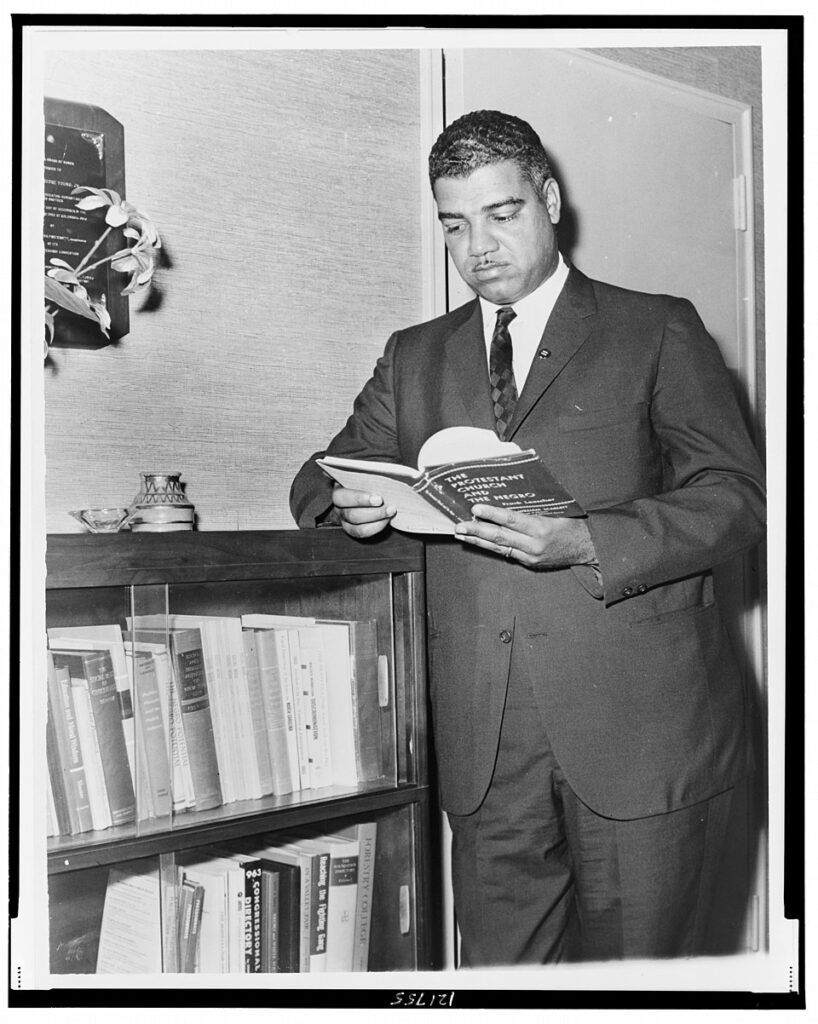
Bottega, J. (1963). Whitney M. Young, Jr. [Photograph]. Library of Congress, New York World-Telegram and Sun Newspaper Photograph Collection. Wikimedia Commons. Link
Civil Rights Leader: Whitney M. Young Jr. focused on expanding job opportunities, economic access, and practical solutions to inequality for Black Americans.
Whitney Young Jr. was an influential civil rights leader best known for leading the National Urban League and pushing for economic and social opportunities for Black Americans. Young focused on practical solutions (improving jobs, housing, and access to education) while also working closely with government and business leaders to create structural change with training programs, job opportunities, and policies that reduced poverty and racial disparities. Young was known for his pragmatic and diplomatic style, helping bridge the gap between grassroots activism and institutional change. His behind-the-scenes influence played a key role in shaping federal civil rights and anti-poverty programs of the 1960s.
Young matters because he shifted the Civil Rights Movement toward economic empowerment, helping ensure that civil rights meant not just legal equality but real access to jobs, housing, and opportunity.
Research Tip: Students can explore Young’s book “To Be Equal” to see how he argued for economic justice as the next phase of the Civil Rights Movement.
32. Ernestine Eckstein (1941–1992)
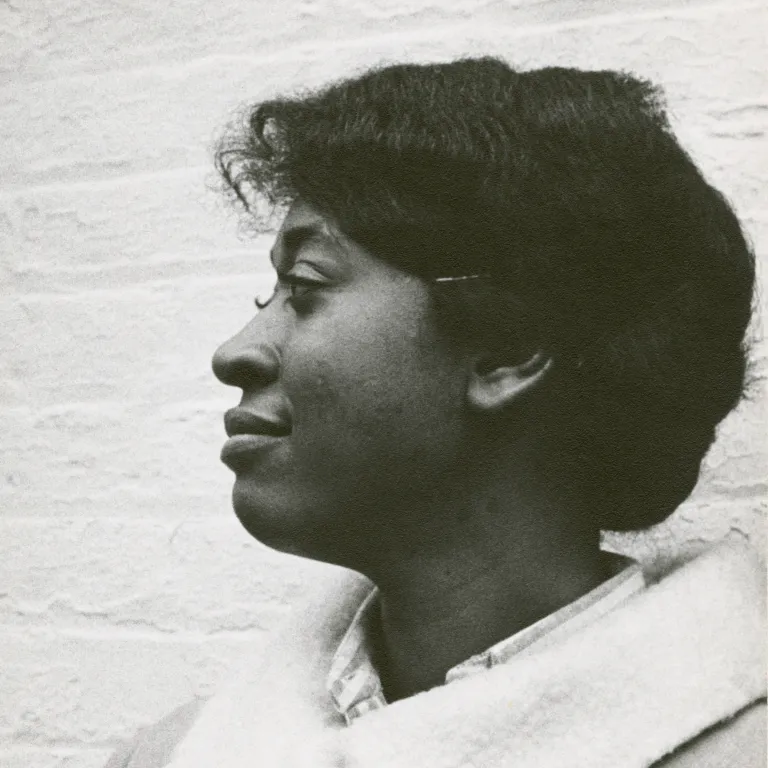
Lahusen, K. (c. 1965). Ernestine Eckstein at White House picket line [Photograph]. New York Public Library Digital Collections. (Courtesy via Making Gay History / NYPL) Link
Gay Rights Leader: Ernestine Eckstein was one of the earliest Black lesbian activists in the U.S. LGBTQ+ civil rights movement.
Ernestine Eckstein was a pioneering LGBTQ+ civil rights activist who helped bring visibility and strategy to the movement in the 1950s and 1960s. As a member and organizer with the Daughters of Bilitis, the first lesbian civil rights organization in the U.S., she worked to challenge stereotypes, expand acceptance, and push for social and legal recognition of LGBTQ+ people. At a time when public LGBTQ+ activism was rare and risky, she participated in landmark protests, including early “Annual Reminder” pickets that challenged discrimination in front of government buildings.
Eckstein pushed LGBTQ+ organizations toward more strategic, direct-action approaches, helping lay the groundwork for later gay rights movements, and broadened the meaning of civil rights to include gender and sexual identity. Her visibility as a Black lesbian leader brought important intersections of race, gender, and sexuality into early LGBTQ+ activism.
Research Tip: Students can explore Eckstein’s famous 1966 interview in The Ladder, one of the first in which a Black lesbian openly discussed activism, strategy, and civil rights.
33. Booker T. Washington (1856–1915)
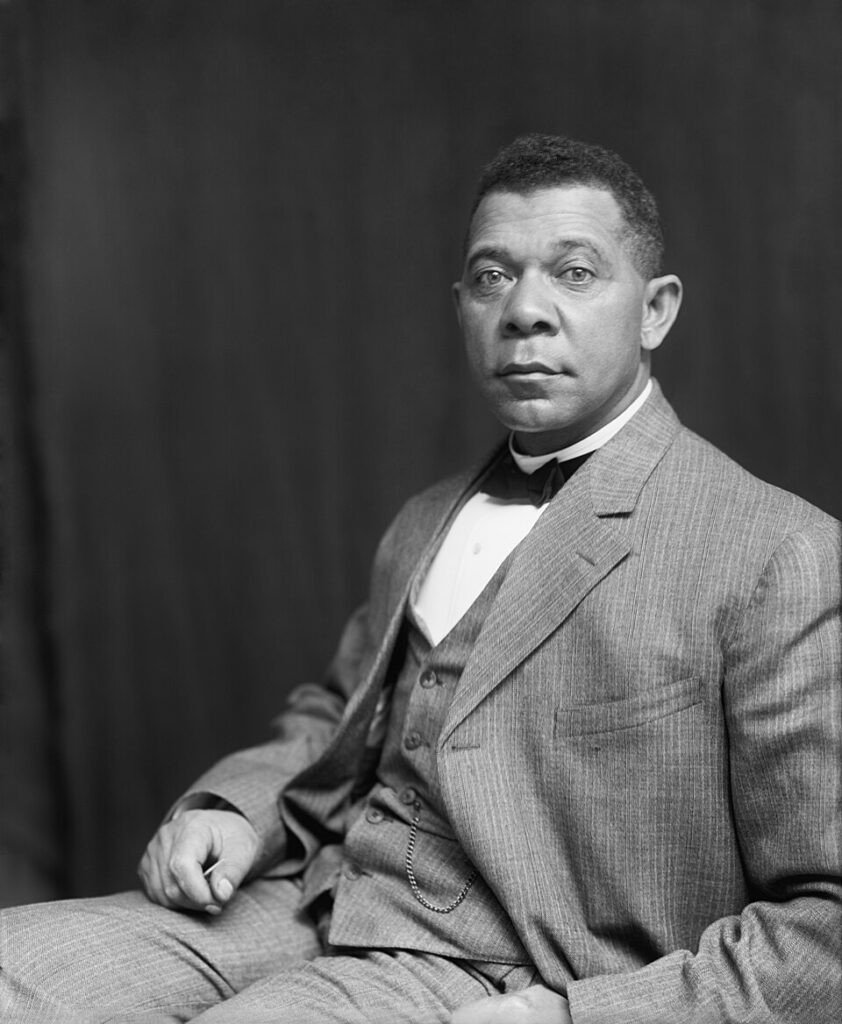
Johnston, F. B. (c. 1895). Booker T. Washington [Photograph]. Wikimedia Commons. Link
Educational Leader: Booker T. Washington was one of the most influential African American educators and public figures of the late 19th and early 20th centuries.
Booker T. Washington was a prominent educator, author, and civil rights leader who became one of the most influential African American voices in the late 19th and early 20th centuries. Born into slavery, Washington believed that access to practical education, vocational training, and economic opportunity could help Black Americans gain equality and improve their social position in a deeply segregated society. He founded the Tuskegee Institute, which became a leading school for Black students and a model for vocational education. Though his approach sometimes differed from other activists who pushed for immediate civil rights, Washington’s lifelong dedication to education and self-improvement played a major role in expanding opportunity and advancing civil rights.
His leadership helped expand educational access for African Americans and built lasting institutions that empowered generations of students. His ideas sparked national debates between gradualist and immediate-rights approaches to equality.
Research Tip: Students can compare Washington’s philosophy with W.E.B. Du Bois’s contrasting views to understand how different leaders approached civil rights and racial uplift during the same era.
34. Coretta Scott King (1927–2006)
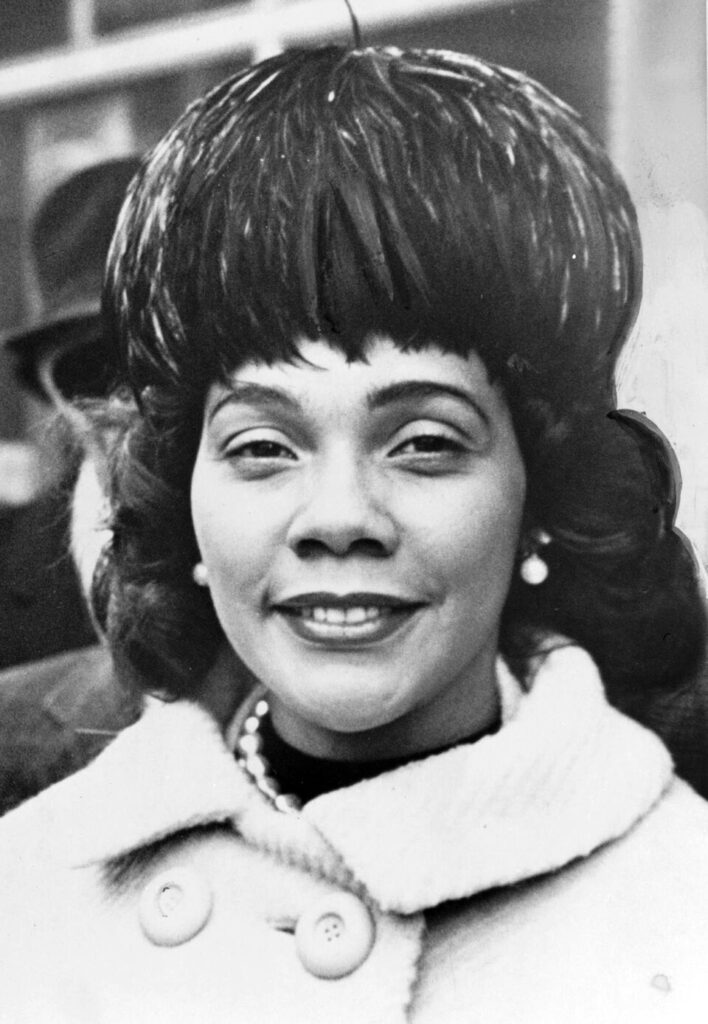
Hiller, H. (1964). Coretta Scott King [Photograph]. New York World-Telegram & Sun, Library of Congress. Wikimedia Commons. Link
Racial Equity Leader: Coretta Scott King was a central figure in the Civil Rights Movement and a lifelong advocate for equality, peace, women’s rights, and LGBTQ+ rights.
Coretta Scott King was a powerful civil rights leader, activist, and advocate for social justice who carried on the work of equality long after the life and legacy of her husband, Martin Luther King Jr. She played a key role in the Civil Rights Movement, supporting campaigns for voting rights, desegregation, and nonviolent protest. After his assassination, she became a national voice for justice, working tirelessly for racial equality, women’s rights, LGBTQ+ rights, and peace. Coretta Scott King also helped found the Martin Luther King Jr. Center for Nonviolent Social Change, ensuring that future generations would continue learning and working toward equality.
She matters because she expanded the scope of the Civil Rights Movement, championing a broader vision of justice that included racial equality, gender equality, LGBTQ+ rights, and peace activism. Her leadership ensured that the legacy of the movement lived on long after the 1960s.
Research Tip: Students can explore “My Life, My Love, My Legacy,” based on her memoir, to learn how she viewed activism, motherhood, and continuing the fight for justice after MLK’s death.
35. Medgar Evers (1925–1963)
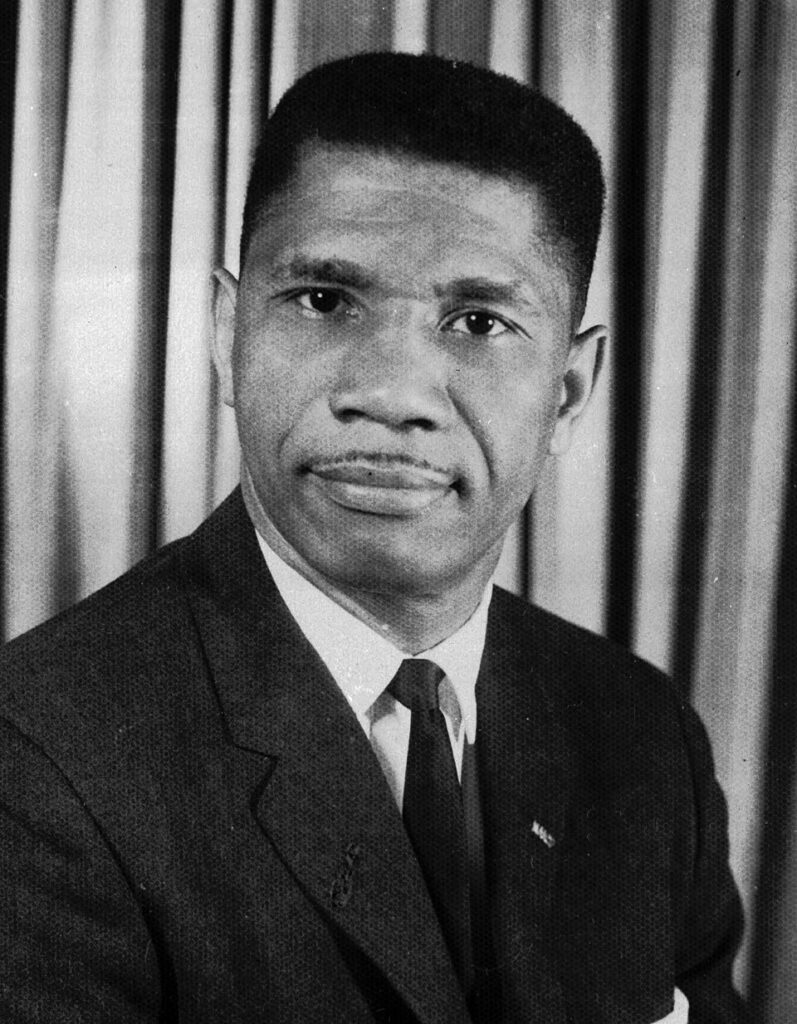
Associated Press. (c. 1963). Medgar Evers [Photograph]. Wikimedia Commons. Link
Racial Justice Leader: Medgar Evers was a courageous civil rights activist who fought relentlessly to end segregation and expand voting rights in Mississippi.
Medgar Evers was a courageous civil rights activist who served as the NAACP’s field secretary in Mississippi, where he worked tirelessly to end segregation and expand voting rights for Black citizens. Evers organized voter registration drives, challenged discriminatory practices, and spoke openly about violence against Black communities in the Deep South. His actions challenged one of the most violently segregated states in the country, making him a target, and in 1963, he was assassinated outside his home. Evers’s sacrifice brought national attention to the dangers civil rights activists faced and energized support for voting rights legislation.
Evers’s sacrifice drew national attention to the brutality faced by civil rights workers and helped build momentum for landmark legislation like the Civil Rights Act of 1964. His legacy continues through the work of his wife, Myrlie Evers-Williams, and ongoing efforts toward voting rights and justice.
Research Tip: Students can research how Evers’s assassination influenced public opinion, media coverage, and federal civil rights action, especially its connections to President Kennedy’s televised civil rights address that night.
36. Daisy Bates (1914–1999)
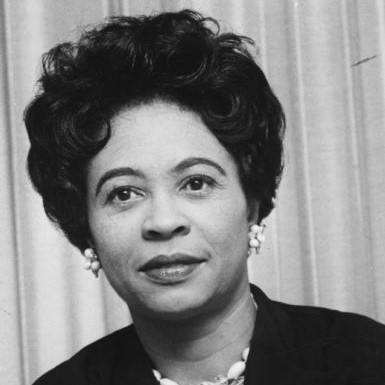
Wisconsin Historical Society. (n.d.). Daisy Bates [Photograph]. Wisconsin Historical Society Archives, IM 5000. Link
Racial Justice Leader: Daisy Bates was a key civil rights advocate in Arkansas who played an essential role in integrating Little Rock Central High School.
Daisy Bates was a dedicated civil rights leader in Arkansas who played a crucial role in integrating Central High School in Little Rock. As the president of the Arkansas NAACP, she provided guidance, support, and protection to the Little Rock Nine, the Black students who faced hostility and danger when they integrated the school in 1957. She worked closely with students and their families, coordinated their safety, and communicated with national leaders and the press. Despite threats, intimidation, and harassment, Bates remained steadfast in her commitment to equal education and desegregation.
Bates’s leadership helped expose the realities of segregation to the nation and demonstrated the courage required to challenge deeply rooted systems of racism. Her work ensured the Little Rock Nine became an enduring symbol of determination and justice in American history.
Research Tip: Students can explore Bates’s autobiography, The Long Shadow of Little Rock, to learn firsthand about the challenges and triumphs of the Little Rock integration crisis.
Sources
- 30 Civil Rights Leaders to Know from Today and the Past
- 25 Black Civil Rights Activists You Need to Know
- Civil Rights Leaders | NAACP
Recent Posts
Starting a Business While Welcoming a New Baby: Finding Your Balance in the Chaos
We’re excited to feature today’s guest post from Josh Moore of Diaper Dads! Josh started Diaper Dads because he knows parenting is a learning curve—and sometimes you just need a little backup...
We created this list of family-friendly restaurants in South Seattle to help our neighbors and readers discover some of the best local spots in our area. Each restaurant was carefully chosen for its...